Shell Egg Sizes & Grades: USDA Quick Reference
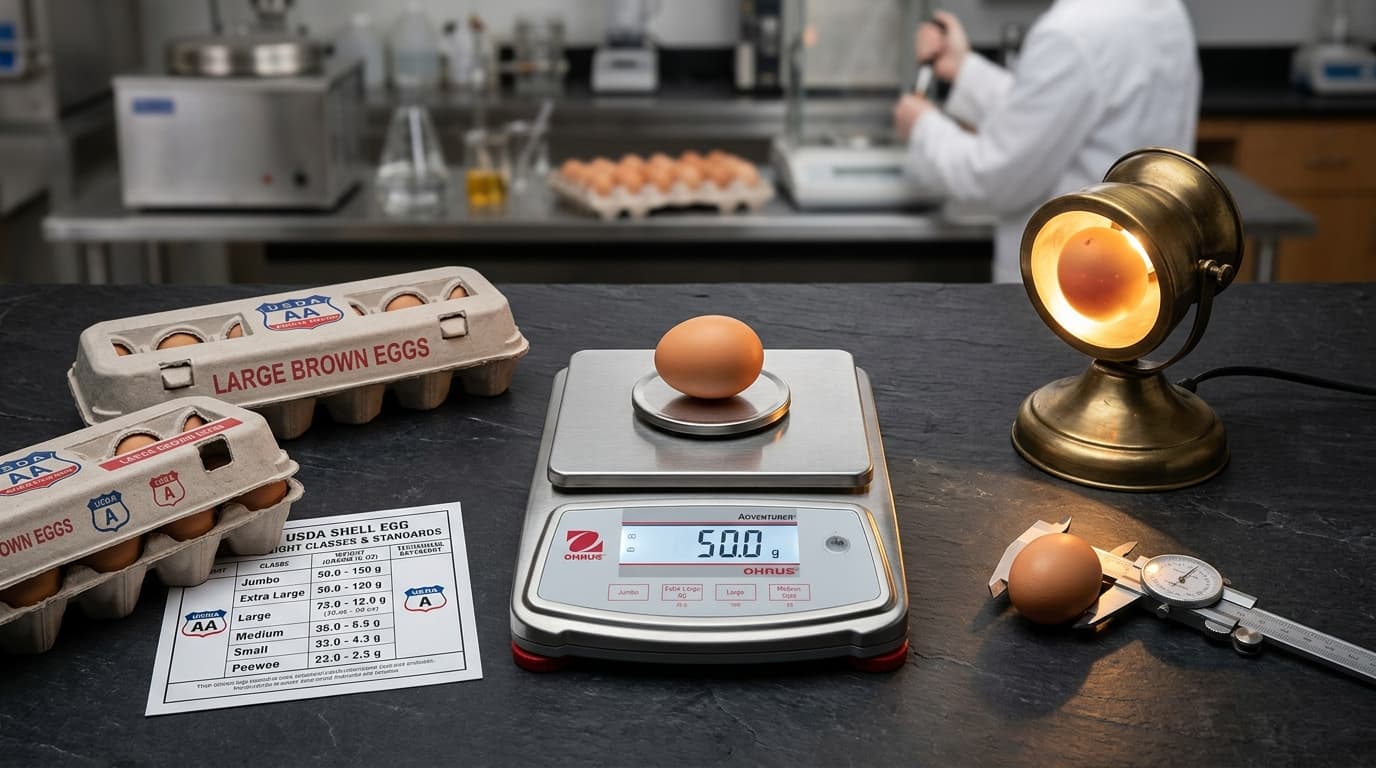
Size = weight. Grade = quality. They are independent.
- Large — 24 oz/dozen, 50g edible (logging default)
- Jumbo — 30 oz/doz, ~63g • XL — 27 oz, ~56g
- Medium — 21 oz, ~44g • Small — 18 oz, ~38g • Peewee — 15 oz, ~30g
- AA — air cell ≤1/8", Haugh ≥72
- A — air cell ≤3/16", Haugh 60–71 (most cartons)
- B — weaker white; commercial baking route
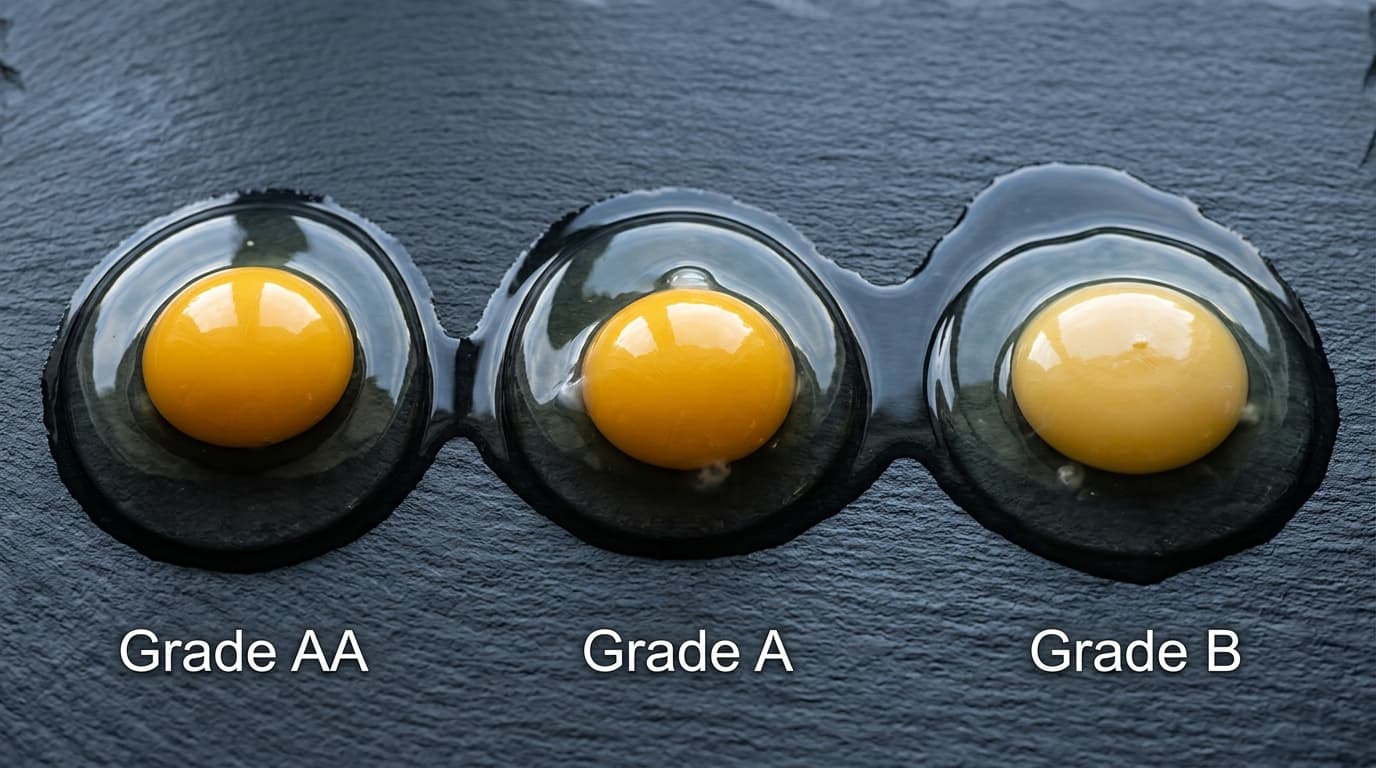
USDA Grade AA
Highest retail grade: compact thick white, high yolk, shallow air cell. Same calories and protein as Grade A at the same size — only structure differs.
- •Air cell ≤1/8 inch, practically regular.
- •Albumen clear and firm; break-out ≥72 Haugh units.
- •Yolk outline only slightly defined under candling.
- •Preferred when white must hold shape in poaching or sunny-side up.
- •After 7–10 days refrigerated, many AA eggs read as Grade A on candling.
- •Very fresh AA eggs (low albumen pH) can be harder to peel hard-boiled.
USDA Grade A
The default supermarket grade. Clear, reasonably firm white; well-centered yolk. Log as Large (50g) unless your carton shows another size class.
- •Air cell ≤3/16 inch with normal boundary.
- •Albumen clear and reasonably firm; 60–71 Haugh units.
- •Shell clean, unbroken, practically normal.
- •All-purpose for scrambles, omelets, baking, and frying.
- •Eggs stored 7–14 days refrigerated often peel more easily when hard-boiled.
- •Nutrients match Grade AA eggs of the same weight class.
USDA Grade B
Thinner white and flatter yolk. Rarely sold as table eggs in supermarkets — routed to commercial baking and liquid egg products.
- •Air cell exceeds 3/16 inch; may show movement from moisture loss.
- •Albumen weak and watery; 31–59 Haugh units.
- •Yolk plainly visible, enlarged, and flattened under candling.
- •Fine when eggs are fully beaten into batter or scrambles.
- •Poor choice for poaching — watery white spreads in water.
- •Common source for commercial liquid whole egg cartons.
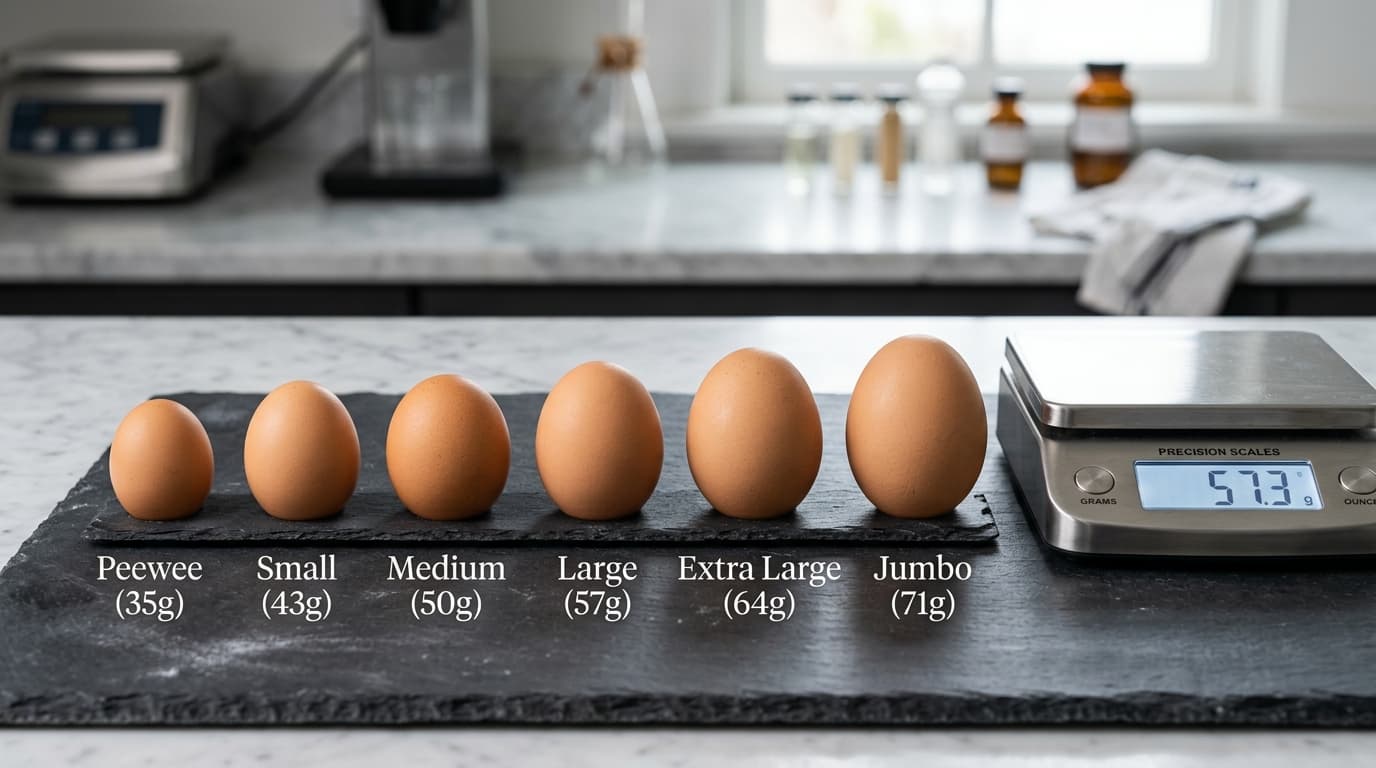
Six USDA Weight Classes (Large = 50g Benchmark)
Size is weighed on a scale — not candled. Large (24 oz/dozen, 50g edible) is the recipe and FDA label baseline. Log the size printed on your carton.
- •Jumbo 30 oz (850g); Extra Large 27 oz (765g); Large 24 oz (680g).
- •Medium 21 oz (595g); Small 18 oz (510g); Peewee 15 oz (425g).
- •Edible liquid scales with grams: Jumbo ~63g, XL ~56g, Large 50g, Medium ~44g, Small ~38g, Peewee ~30g.
- •Younger hens often lay smaller eggs with a slightly higher yolk ratio.
- •Recipes that say “eggs” assume Large unless noted.
- •Substitute with the AEB chart or weigh cracked liquid (50g = 1 Large).
- •5 Medium ≈ 4 Large; 2 Jumbo ≈ 3 Large in baking counts.
Large Egg: 50g Edible Reference
Every FDA Nutrition Facts panel and most cookbooks use Large = 50g edible. When logging one egg in an app, this is the default unless your carton says otherwise.
- •Minimum 24 oz per dozen; ~56.7g in-shell average.
- •50g edible liquid: ~66% white, ~34% yolk.
- •FDA RACC for eggs is 50g (21 CFR 101.12).
- •FDC 171287: 72 kcal, 6.3g protein, 4.8g fat per 50g.
- •One Large ≈ 3 level tablespoons blended raw liquid.
- •Weigh on a scale for precise baking when swapping sizes.
- •Grade (AA vs A) does not change these numbers.

Candling & Haugh Units: How Grade Is Measured
Graders shine light through the shell to measure air cell depth and yolk position. Haugh units quantify albumen firmness on break-out. Size is never measured this way — only quality.
- •Air cell measured from blunt end to pocket boundary.
- •Haugh: HU = 100 × log₁₀(h − 1.7w^0.37 + 7.6); h = albumen height (mm), w = weight (g).
- •≥72 HU = Grade AA; 60–71 = Grade A; 31–59 = Grade B.
- •Cold storage at ≤40°F slows albumen thinning vs room temperature.
- •Flashlight behind an egg in a dark room approximates candling.
- •Large air cell (>⅓ of egg) means more moisture loss — lower grade over time.
- •Floating in water correlates with a larger air cell, not a separate “freshness test” rule.
Shell Egg Sizes & Grades — Logging Calculator
Large = 50g edible, 72 kcal. Explore USDA grade standards, weigh cartons by size class, swap recipe counts, and estimate storage age. Informational journaling tool only — not dietary advice.
Select Official USDA Quality Grade
The air cell is the non-destructive physical clock of the egg. Under federal regulations, an egg cannot legally bear the USDA Grade AA shield if its air cell depth exceeds 1/8 inch at the time of retail packing.
USDA Grade AA Profile
At a Glance
Size (weight class)
Minimum net weight per dozen — 7 CFR Part 56
| Class | Min / dozen | Edible / egg |
|---|---|---|
| Jumbo | 30 oz | ~63g |
| Extra Large | 27 oz | ~56g |
| LargeStandard | 24 oz | 50g |
| Medium | 21 oz | ~44g |
| Small | 18 oz | ~38g |
| Peewee | 15 oz | ~30g |
Grade (quality)
Interior freshness — 7 CFR § 56.216
| Grade | Air cell | Haugh | Typical use |
|---|---|---|---|
| Grade AA | ≤ 1/8 in | ≥ 72 | Poaching, sunny-side up |
| Grade A | ≤ 3/16 in | 60–71 | Scrambles, baking (most cartons) |
| Grade B | > 3/16 in | 31–59 | Commercial baking, liquid egg |
Logging tip: Recipes and FDA labels assume Large (50g). Match size in your app — grade does not change calories or protein.
Size and grade are measured independently: a Small egg can be Grade AA; a Jumbo can be Grade B.
Reference Serving
Buy Grade A Large eggs for everyday cooking and logging — 50g edible, 72 kcal, 6.3g protein.
Large is the recipe and FDA RACC baseline. Grade A is the standard retail grade. Grade AA suits poaching when very fresh; substitute sizes using the AEB matrix (3 Large → 2 Jumbo or 3 Medium).
Grade does not change nutrients — only albumen firmness and yolk height. Weigh cracked eggs (50g = 1 Large) for precise baking. Informational only.
USDA Egg Size Chart (Minimum Dozen Weight & Edible Yield)
| Nutrient | Size | Min/dozen | In-shell | Edible | Calories | Protein |
|---|---|---|---|---|---|---|
| Jumbo | 30 oz (850g) | 70.9g | 63g | 90 kcal* | 7.9g | |
| Extra Large | 27 oz (765g) | 63.8g | 56g | 80 kcal* | 7.0g | |
| Large (standard) | 24 oz (680g) | 56.7g | 50g | 72 kcal | 6.3g | |
| Medium | 21 oz (595g) | 49.6g | 44g | 63 kcal* | 5.5g | |
| Small | 18 oz (510g) | 42.5g | 38g | 54 kcal* | 4.8g | |
| Peewee | 15 oz (425g) | 35.4g | 30g | 43 kcal* | 3.8g |
7 CFR § 56.218 minimum dozen weights. Edible liquid and macros scale with grams (FDC 171287 baseline for Large).
USDA Grade Chart: AA vs A vs B (7 CFR § 56.216)
| Nutrient | Factor | Grade AA | Grade A | Grade B |
|---|---|---|---|---|
| Air cell depth | ≤ 1/8 in (3.2 mm) | ≤ 3/16 in (4.8 mm) | > 3/16 in | |
| Haugh units | ≥ 72 | 60–71 | 31–59 | |
| Albumen | Clear, firm | Clear, reasonably firm | Weak, watery | |
| Yolk | Slightly defined, centered | Fairly defined, centered | Plainly visible, flat | |
| Typical use | Poach, sunny-side up | Scramble, bake, fry | Commercial baking, breakers |
Grade measures interior quality only — not calories, protein, or shell color.
Recipe Substitution When a Recipe Calls for Large Eggs (AEB)
| Nutrient | Large needed | Jumbo | Extra Large | Medium | Small | Liquid target |
|---|---|---|---|---|---|---|
| 1 | 1 | 1 | 1 | 1 | 50g | |
| 2 | 2 | 2 | 2 | 3 | 100g | |
| 3 | 2 | 3 | 3 | 4 | 150g | |
| 4 | 3 | 4 | 5 | 5 | 200g | |
| 5 | 4 | 4 | 6 | 7 | 250g | |
| 6 | 5 | 5 | 7 | 8 | 300g |
From AEB conversion chart. For 1–2 eggs, adjacent sizes usually swap 1:1; from 3+ eggs in baking, follow counts or weigh to 50g per Large.
Size vs Grade — The Direct Answer
Every carton shows two independent labels. Size (Jumbo, Large, Medium…) is set by minimum dozen weight on a scale. Grade (AA, A, B) is set by candling — air cell depth, albumen firmness, and yolk position.
For food diary logging, pick the size that matches your carton (Large = 50g edible). Grade does not change calories, protein, or fat — only how the white spreads in the pan.
Six USDA Weight Classes
Under 7 CFR § 56.218, commercial eggs sort into six classes. Large (24 oz/dozen, ~50g edible) is the universal recipe and FDA Nutrition Facts baseline.
Log other sizes by edible grams: Medium ~44g, Small ~38g, Extra Large ~56g, Jumbo ~63g, Peewee ~30g. Use the substitution table or a kitchen scale when baking with 3+ eggs.
Three USDA Quality Grades
Grade AA: shallowest air cell (≤1/8 in), firmest white (≥72 Haugh units) — best for poaching and sunny-side up when very fresh.
Grade A: most retail cartons — air cell ≤3/16 in, Haugh 60–71. All-purpose for scrambles, omelets, and baking.
Grade B: thinner white, flatter yolk — routed to bakeries and liquid egg products; rarely sold as table eggs in supermarkets.
Reading the Carton & Logging Your Eggs
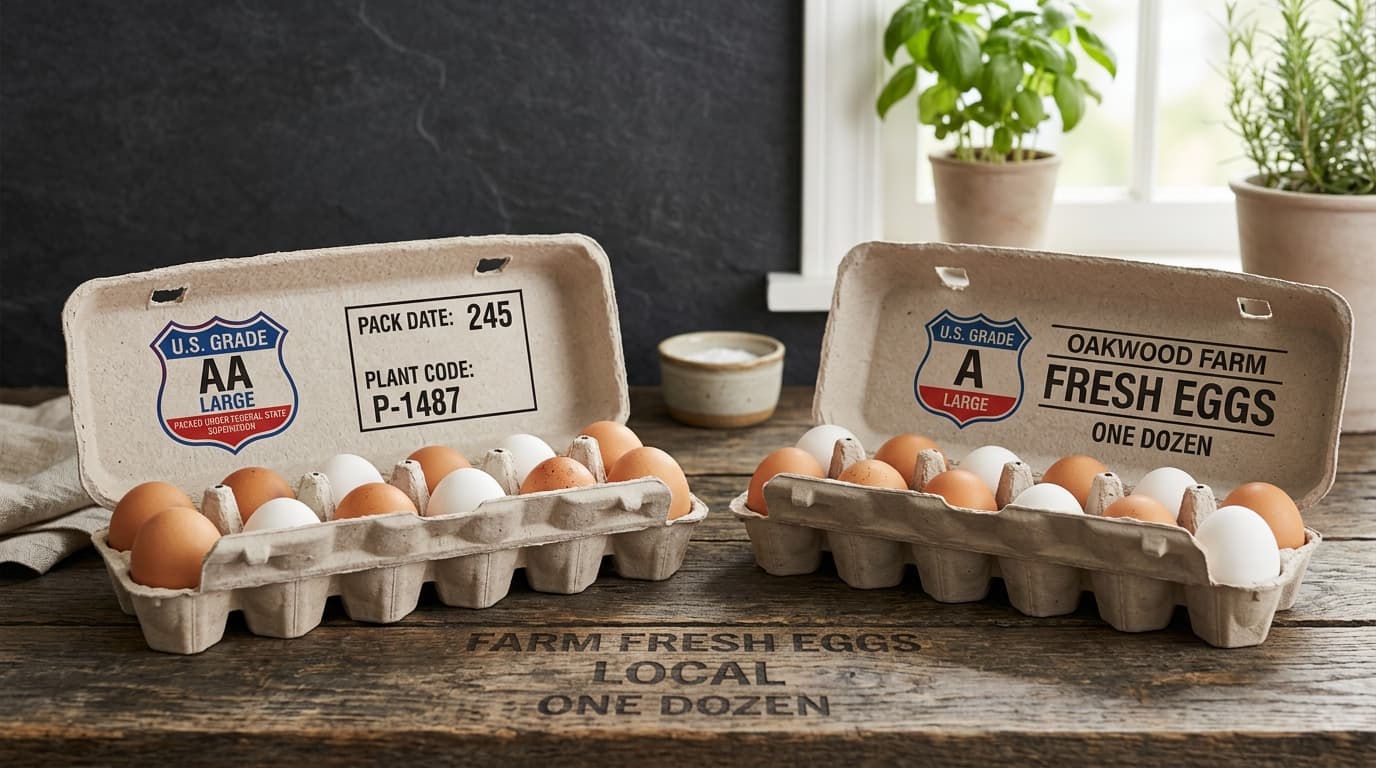
USDA shield: voluntary federal grading. Julian date: 3-digit pack day (001 = Jan 1). P-number: packing plant code.
Refrigerate at ≤40°F (4°C). For hard-boiling, eggs packed 7–14 days ago often peel more easily as albumen pH rises. Log cooking fat separately when frying.
Common Misconceptions
Myth: Grade AA eggs have more protein than Grade A eggs.
Fact: Grade measures albumen firmness and air cell depth — not nutrients. Same-size AA and A eggs log identical calories and protein.
Myth: Jumbo eggs are higher quality than Medium eggs.
Fact: Size and grade are independent. Size = weight; grade = freshness/structure.
Myth: Brown eggs are graded higher than white eggs.
Fact: Shell color comes from hen breed. Grading criteria are the same for white and brown shells.
Myth: A blood spot means the egg is fertile or spoiled.
Fact: Small blood spots occur in less than 1% of eggs from a ruptured vessel during formation. USDA allows pinhead spots in Grade A; remove before cooking if you prefer.
Myth: Fresh Grade AA eggs are easiest to peel hard-boiled.
Fact: Very fresh eggs (low albumen pH ~7.6) stick to the shell membrane. Eggs stored 7–10 days refrigerated often peel more easily as pH rises toward ~9.2.
Practical Notes for Tracking
- •Default to Large for recipes and food apps (50g edible per egg).
- •Match carton size class in your logger — not just “1 egg”.
- •Use Grade A Large for everyday cooking; Grade AA when poaching very fresh eggs.
- •Substitute sizes with the AEB table or weigh cracked liquid (50g = 1 Large).
- •Read the Julian pack date for age; grade on the shield describes quality at packing.
Informational only — for personal nutrition awareness and journaling. Not personalized dietary advice. Disclaimer
Frequently Asked Questions
Scientific References & Data Sources
Nutrition values on this page are derived from the peer-reviewed sources below. This page is for informational food logging and personal awareness only. See our disclaimer.
Federal rules for USDA Grade AA/A/B quality and six weight classes (Jumbo through Peewee).
Official handbook for candling, air-cell depth, break-out grading, and Haugh unit measurement.
Official Large-egg substitution counts and 1-cup equivalents by size.
Consumer handling guidance: refrigerate at ≤40°F (4°C) and cook until firm.
Large whole egg baseline: 50g edible, 72 kcal, 6.3g protein (FDC analytical values).
Our data sourcing, verification, and fact-checking methodology.