Egg Size Conversion Chart & Substitution Guide
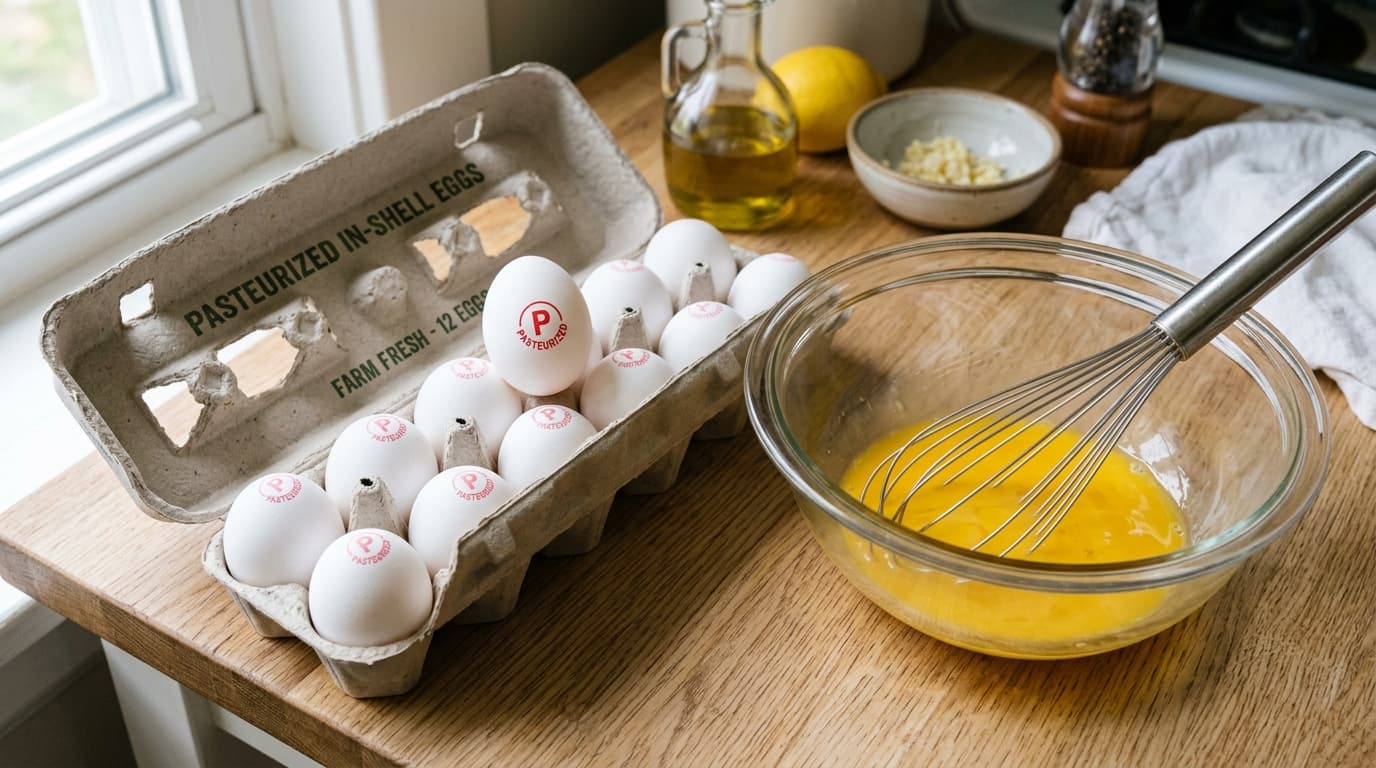
Recipe & food diary reference
Egg Size Conversion Chart: Swap, Weigh & Log
Recipes assume Large eggs (50g edible). The chart below follows the American Egg Board substitution matrix — use the interactive calculator to scale grams for your food diary or adjust batters.
Informational only — not dietary advice.
Substitution & 1-Cup Equivalents
Full 1–12 matrix is in the page tables below and in the calculator.
| Large | Jumbo | XL | Med | Small |
|---|---|---|---|---|
| 1 | 1 | 1 | 1 | 1 |
| 2 | 2 | 2 | 2 | 3 |
| 3 | 2 | 3 | 3 | 4 |
| 4 | 3 | 4 | 5 | 5 |
| 5 | 4 | 4 | 6 | 7 |
| 6 | 5 | 5 | 7 | 8 |
| Size | Whole / cup | Whites | Yolks |
|---|---|---|---|
| Jumbo | 4 | 5 | 11 |
| Extra Large | 4 | 6 | 12 |
| Large | 5 | 7 | 14 |
| Medium | 5 | 8 | 16 |
| Small | 6 | 9 | 18 |
How to Use the Chart
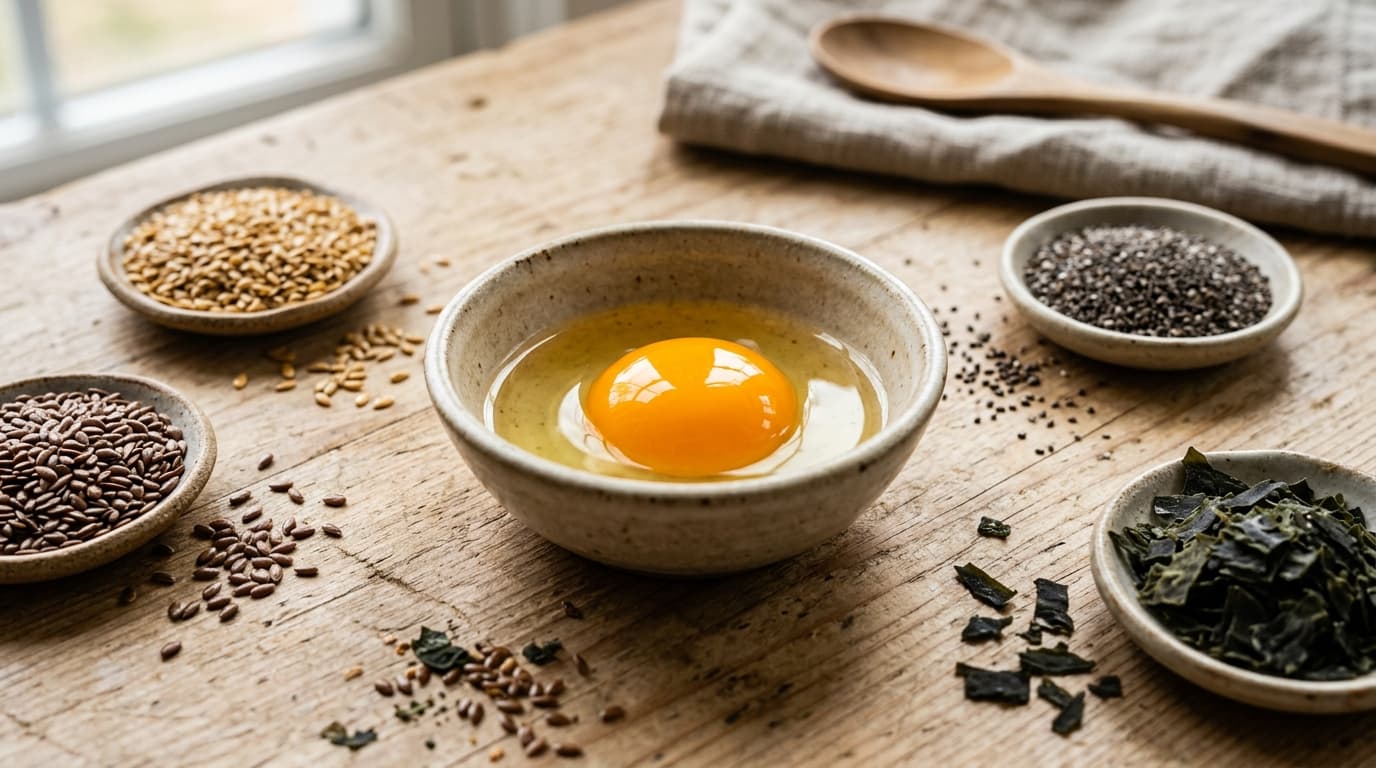
Weigh in Grams for Logging & Precision Baking
Professional kitchens and accurate food logs use weight, not shell count. Crack eggs into a tared bowl and pour until you hit the target grams — especially when your carton mixes sizes.
- •Large whole egg (no shell) = 50g
- •Large white ≈ 33g · Large yolk ≈ 17g
- •4 Large eggs = 200g liquid target
- •Log with FDC 171287 scaled by edible grams
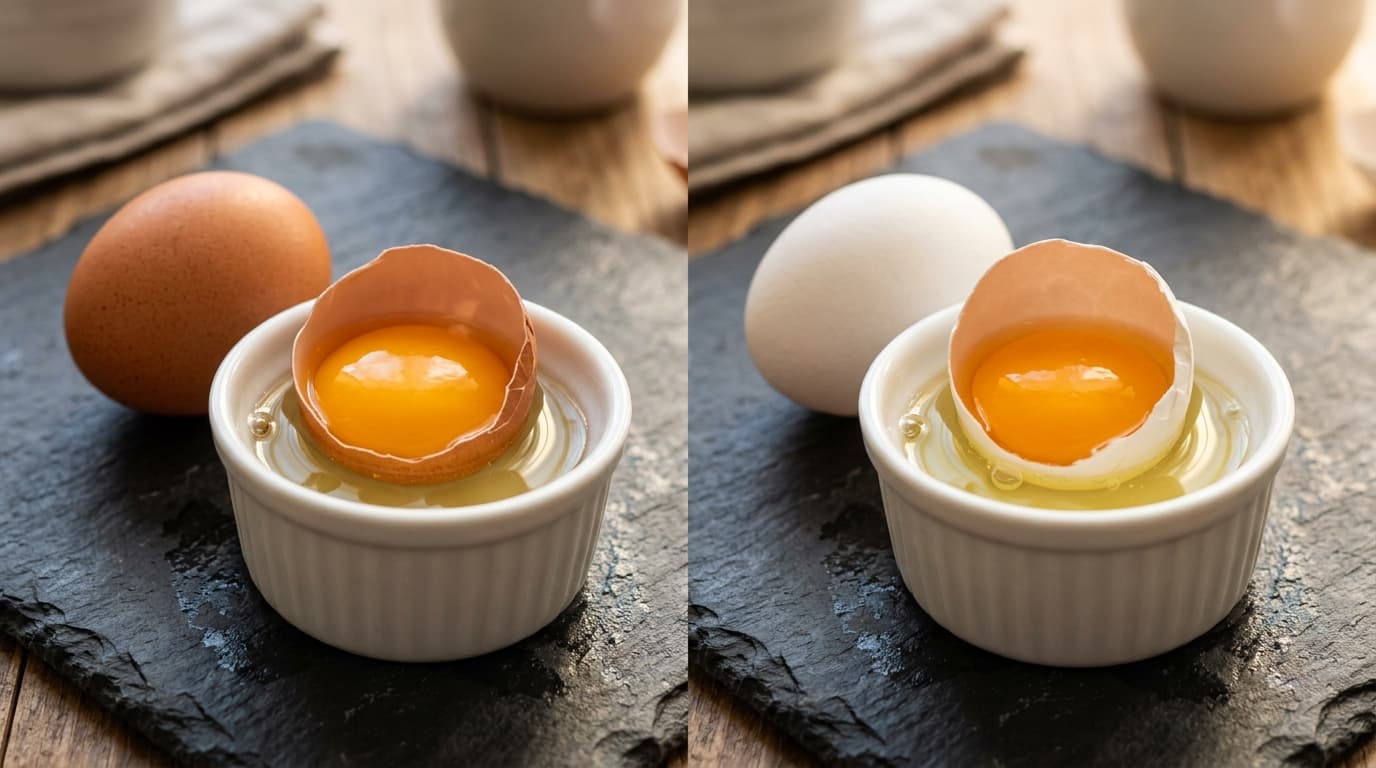
Whisk & Measure: Halve Odd Egg Counts
Halving a recipe that needs 1 or 3 Large eggs is straightforward: blend one egg completely, then measure the fraction by weight or volume.
- •Whisk yolk + white until uniform gold liquid
- •Half Large egg = 25g or 1 tbsp + 2 tsp
- •1½ Large = 1 whole + 25g beaten
- •Refrigerate leftover beaten egg up to 48 hours
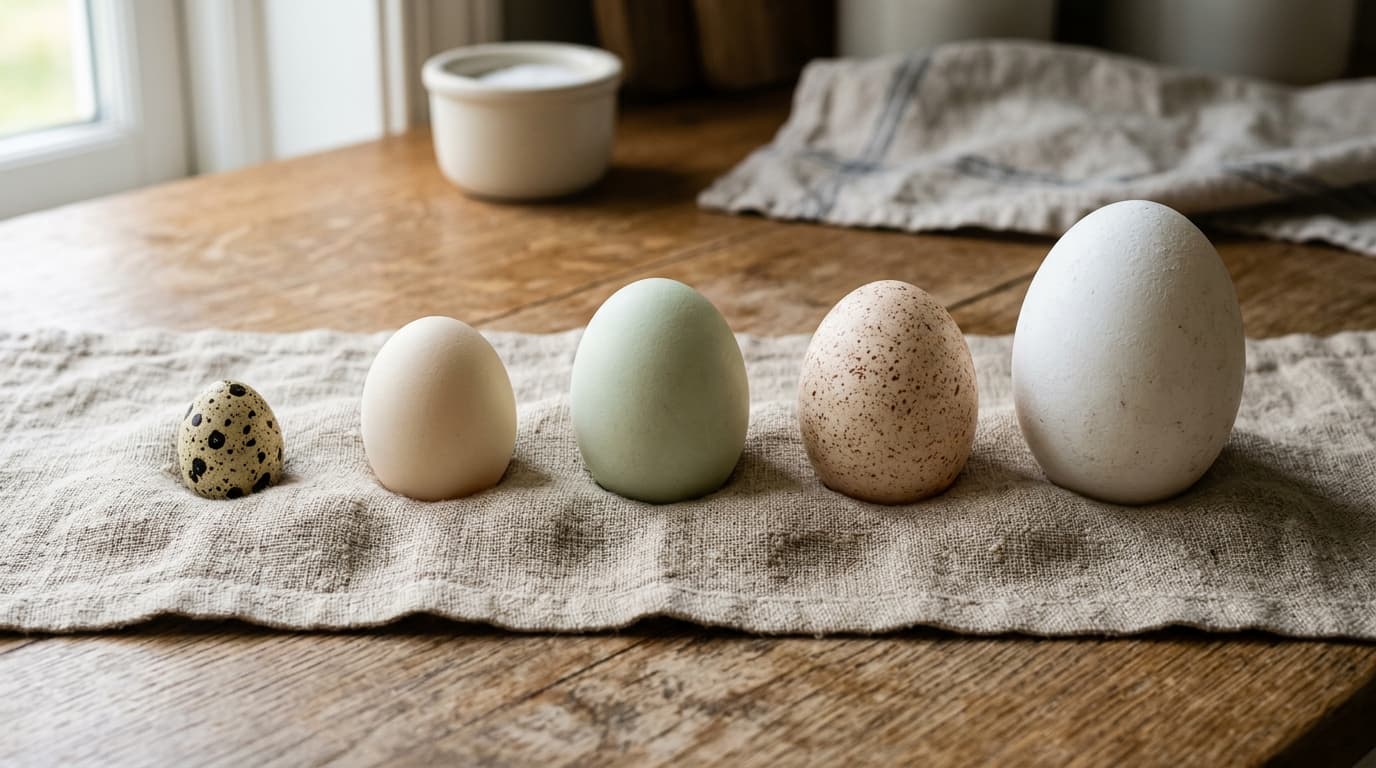
US vs UK/EU vs Australia: The “Large” Label Trap
Egg size names are not universal. A British recipe calling for “Large” eggs expects heavier in-shell weights than American “Large” — mismatch is a common cause of dry or wet cakes abroad.
- •US Large = 56.7g in-shell / 50g edible
- •UK/EU Large = 63–73g (≈ US Extra Large)
- •UK/EU Medium = 53–63g (≈ US Large)
- •AU Large ≈ 52g in-shell (lighter than US Large)
Quick reference strip
30g
8/cup whole38g
6/cup whole44g
5/cup whole50g
5/cup whole56g
4/cup whole63g
4/cup wholeMore detail: Egg sizes & weights
Egg Size Substitution Calculator
Swap egg sizes using the American Egg Board matrix, scale grams for your food diary, or measure cup yields. Informational only — not dietary advice.
Use:
3 × Medium eggs
Delivers 132g liquid (target 150g).
Add ~1 tbsp milk or water to restore hydration in egg-heavy batters.
Log macros: 132g × (FDC 171287 per 100g) ÷ 100
At a Glance
Baseline: 1 Large egg = 50g edible liquid = ~3.25 tbsp (FDC 171287).
Quick rules: For 1–2 eggs, adjacent sizes (Medium ↔ Large ↔ XL) usually swap 1:1 in everyday cooking. From 3+ eggs in structure-heavy bakes, use the AEB matrix or a scale.
1 cup whole egg: 5 Large, 4 Jumbo/XL, 5 Medium, or 6 Small (AEB). Half an egg: whisk one Large egg and measure 25g (1 tbsp + 2 tsp).
Reference Serving
1 Large = 50g liquid = 3.25 tbsp — the recipe and logging baseline
AEB matrix examples: 3 Large → 2 Jumbo or 3 Medium; 4 Large → 3 Jumbo or 5 Medium; 5 Large → 4 Jumbo or 6 Medium. For logging, scale calories and protein with edible grams (Medium ≈ 44g, Jumbo ≈ 63g per egg).
Scrambles, omelets, and pancakes tolerate any size 1:1. Delicate sponges and meringues benefit from weighing. Informational only — not dietary advice.
Egg Size Substitution Matrix (Recipe Calls for Large Eggs)
| Nutrient | Large (standard) | Jumbo | Extra Large | Medium | Small | Notes |
|---|---|---|---|---|---|---|
| 1 | 1 | 1 | 1 | 1 | 1 | Direct swap in most recipes |
| 2 | 2 | 2 | 2 | 2 | 3 | 3 Small ≈ 114g vs 100g target |
| 3 | 3 | 2 | 3 | 3 | 4 | 2 Jumbo slightly low — add 1 tbsp liquid if needed |
| 4 | 4 | 3 | 4 | 5 | 5 | Key threshold for layer cakes and sponges |
| 5 | 5 | 4 | 4 | 6 | 7 | 4 Jumbo ≈ 252g (near 250g target) |
| 6 | 6 | 5 | 5 | 7 | 8 | Weigh for angel food / chiffon batches |
| 7 | 7 | 6 | 6 | 8 | 9 | 8 Medium ≈ 352g vs 350g target |
| 8 | 8 | 6 | 7 | 9 | 10 | Consider whisk-and-weigh above 6 eggs |
| 9 | 9 | 7 | 8 | 10 | 12 | 8 XL ≈ 448g vs 450g target |
| 10 | 10 | 8 | 9 | 11 | 13 | Commercial batch — use a scale |
| 11 | 11 | 9 | 10 | 12 | 14 | Weigh liquid for best parity |
| 12 | 12 | 10 | 11 | 14 | 16 | 600g edible liquid ≈ 2.5 cups |
Substitution counts from American Egg Board. Gram notes use USDA average edible weights (Large 50g, Medium 44g, Small 38g, XL 56g, Jumbo 63g).
1-Cup & Volume Equivalents (AEB Standard)
| Nutrient | Size | Whole → 1 cup | Whites → 1 cup | Yolks → 1 cup | Tbsp / whole egg | Edible weight |
|---|---|---|---|---|---|---|
| Jumbo | 4 eggs | 5 whites | 11 yolks | ~4.0 tbsp | ~63g | |
| Extra Large | 4 eggs | 6 whites | 12 yolks | ~3.6 tbsp | ~56g | |
| Large (standard) | 5 eggs | 7 whites | 14 yolks | ~3.25 tbsp | ~50g | |
| Medium | 5 eggs | 8 whites | 16 yolks | ~2.9 tbsp | ~44g | |
| Small | 6 eggs | 9 whites | 18 yolks | ~2.5 tbsp | ~38g | |
| Peewee | 8 eggs | 12 whites | 22 yolks | ~2.0 tbsp | ~30g |
1 cup = 240 mL. Separated: Large white ≈ 2 tbsp (33g); Large yolk ≈ 1.25 tbsp (17g).
USDA Size Weights: Shell, Edible Liquid, White & Yolk
| Nutrient | Size | Min dozen (oz) | In-shell (g) | Edible (g) | White (g) | Yolk (g) |
|---|---|---|---|---|---|---|
| Jumbo | 30 | 70.9 | 63.0 | 42.5 | 20.5 | |
| Extra Large | 27 | 63.8 | 56.0 | 37.5 | 18.5 | |
| Large (standard) | 24 | 56.7 | 50.0 | 33.0 | 17.0 | |
| Medium | 21 | 49.6 | 44.0 | 28.5 | 15.5 | |
| Small | 18 | 42.5 | 38.0 | 24.5 | 13.5 | |
| Peewee | 15 | 35.4 | 30.0 | 19.5 | 10.5 |
Aligned with Egg Sizes & Weights and FDC 171287. Log macros by edible grams × FDC per-100g values.
International Size Alignment (US vs UK/EU vs Canada vs Australia)
| Nutrient | US size | In-shell (g) | UK / EU label | Canada (min g) | Australia | When baking US recipes abroad |
|---|---|---|---|---|---|---|
| US Jumbo | 70.9+ | Very Large (73g+) | 70g+ | Jumbo 68g+ | Use as-is or reduce count in delicate bakes | |
| US Extra Large | 63.8 | Large (63–73g) | 64–69g | XL 60–67g | UK “Large” ≈ US XL — not US Large | |
| US Large (standard) | 56.7 | Medium (53–63g) | 56–63g | Large 52–59g | Use UK/EU Medium for US Large recipes | |
| US Medium | 49.6 | Small (under 53g) | 49–55g | Medium 43–51g | AU Large is lighter than US Large | |
| US Small | 42.5 | Small | 42–48g | Small under 43g | Rare in retail; common from young hens |
Weight classes differ by country — always weigh liquid eggs when converting international recipes. See Egg Sizes & Weights.
Why Recipes Assume Large Eggs (50g Rule)
When a recipe lists “eggs” without a size, it means USDA Large: ~56.7g in-shell, 50g edible liquid (~33g white + ~17g yolk). That round number makes baker’s math simple — 4 eggs = 200g liquid.
For food diary logging, use FDC 171287 per Large egg (72 kcal, 6.3g protein) or scale by edible grams for Medium (≈44g), XL (≈56g), or Jumbo (≈63g) eggs.
When Size Swaps Matter in the Kitchen
Eggs add water, protein structure, and yolk fat to batters. Using four Medium eggs (176g) instead of four Large (200g) removes 24g liquid — roughly half an egg’s worth — which can dry out cakes or reduce rise in egg-heavy sponges.
High-attention bakes: chiffon, angel food, macarons, custards — weigh 50g liquid per Large egg. Forgiving dishes: scrambles, frittatas, pancakes, meatloaf — swap sizes 1:1.
Whisk & Measure: Halving Odd Egg Counts
To halve a recipe that calls for 1 or 3 Large eggs: crack one egg, whisk yolk and white together, then measure 25g (1 tbsp + 2 tsp) per half Large egg. Use the remainder within 48 hours for scrambles or egg wash.
UK/EU vs US: The “Large” Label Trap
A UK/EU Large egg (63–73g in-shell) matches a US Extra Large or Jumbo — not a US Large. For American recipes in Britain, use UK Medium eggs (53–63g). Australian Large (~52g in-shell) is closer to US Medium; use AU Extra Large or Jumbo when a US recipe specifies Large.
When in doubt, crack eggs into a bowl and weigh to the target gram total rather than counting shells.
Common Misconceptions
Myth: Any egg size swaps 1:1 in all baking.
Fact: Fine for 1–2 eggs in cookies or quick breads. From 3–4+ eggs in structure-heavy recipes, size gaps add up — use the conversion chart or a scale.
Myth: You cannot halve a recipe with an odd egg count.
Fact: Whisk one egg and measure 25g (half a Large egg) by weight or 1 tbsp + 2 tsp by volume.
Myth: British “Large” equals American “Large”.
Fact: UK/EU Large (63–73g) ≈ US Extra Large. UK Medium (53–63g) ≈ US Large (56.7g).
Myth: Jumbo eggs have more protein per gram than Medium eggs.
Fact: Protein density per 100g is the same flock-to-flock. Larger eggs simply contain more total grams.
Myth: Carton liquid whites whip like fresh shell whites.
Fact: Pasteurized carton whites are heat-treated, which can reduce foam volume for stiff meringues. Fine for omelets and many baked goods.
Practical Notes for Tracking
- •Default to Large eggs (50g edible) when a recipe does not specify size.
- •Swap 1–2 eggs across adjacent sizes without math in everyday cooking.
- •Use the AEB matrix or a scale when a recipe calls for 3+ eggs in sponges or custards.
- •Weigh cracked eggs: target grams ÷ 50 = Large-egg equivalent for logging.
- •UK/EU Medium ≈ US Large when following American recipes abroad.
- •Whisk-and-measure 25g to halve one Large egg in scaled-down recipes.
Informational only — for personal nutrition awareness and journaling. Not personalized dietary advice. Disclaimer
Frequently Asked Questions
Scientific References & Data Sources
Nutrition values on this page are derived from the peer-reviewed sources below. This page is for informational food logging and personal awareness only. See our disclaimer.
Official substitution matrix for Large eggs vs Jumbo, Extra Large, Medium, and Small, plus 1-cup whole/white/yolk equivalents.
Shell-to-liquid and dried/frozen egg product conversion reference for commercial and home kitchens.
Federal minimum net weights per dozen for Jumbo (30 oz), Extra Large (27 oz), Large (24 oz), Medium (21 oz), Small (18 oz), and Peewee (15 oz).
Baker’s reference: 1 Large whole egg = 50g; white ≈ 30–35g; yolk ≈ 14g.
Reference nutrient profile for standard Large raw whole chicken eggs (50g edible portion).
Canadian egg weight classes and Large-egg substitution chart for baking.
Our data sourcing, verification, and fact-checking methodology.