Egg Composition & Anatomy: Structure for Kitchen Logging
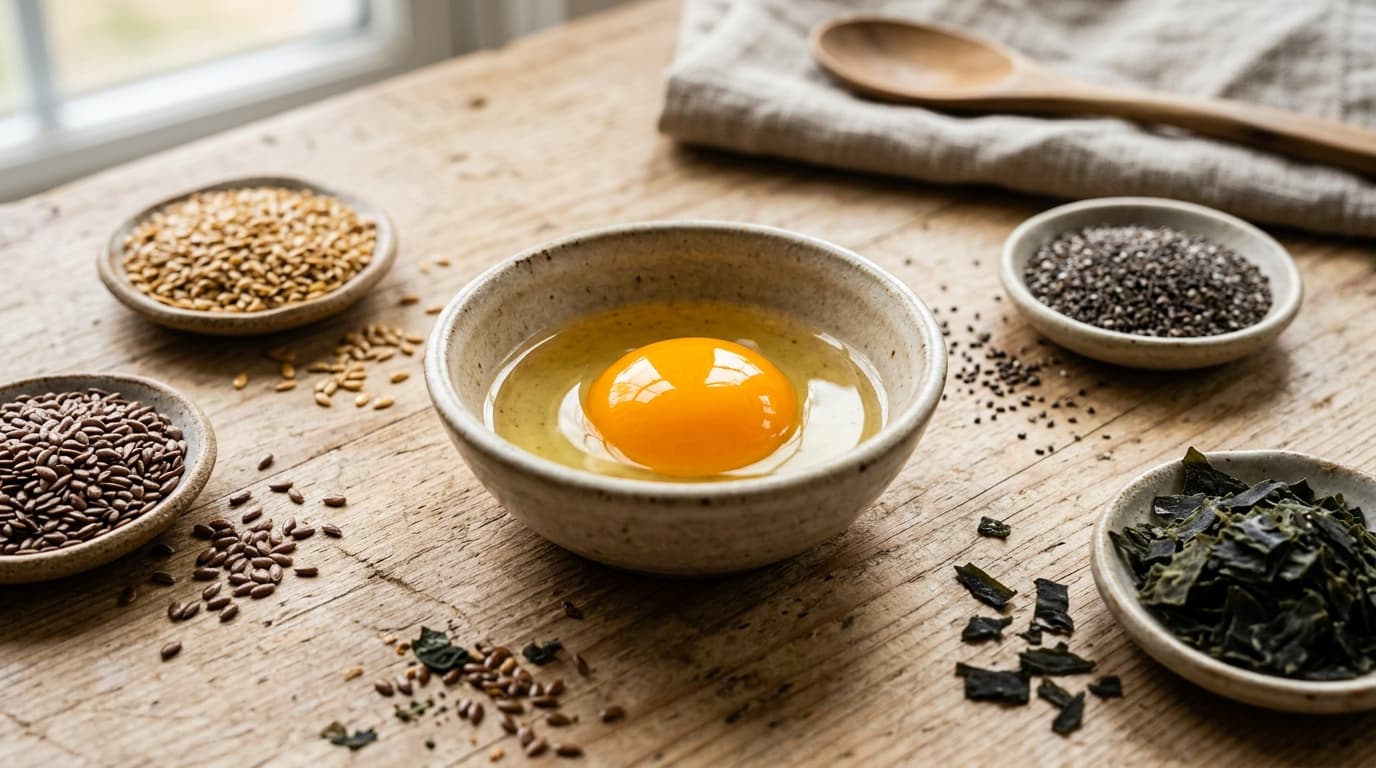
Food diary & kitchen reference
Inside a Shell Egg: Layers, Macros & What to Log
A USDA Large egg yields 50g edible liquid — about 33g albumen and 17g yolk (FDC 171287: 72 kcal, 6.3g protein). This visual guide maps each anatomical layer so you can log whole eggs, whites, or yolks accurately and understand how storage changes texture.
Informational only — not dietary advice.
50g edible · 33g white · 17g yolk · ~5.7g shell
FDC 171287 (whole), 172183 (white), 172184 (yolk). Other sizes →
White ≈ 17 kcal · Yolk ≈ 55 kcal per Large egg · ~99% of fat is in the yolk
Anatomical Layers
Each layer has a structural role in the egg and a distinct kitchen function — from shell porosity to yolk emulsification.

Shell, Cuticle & Membranes
The shell is ~94–96% calcium carbonate with 7,000–17,000 microscopic pores for gas exchange. The cuticle (bloom) is a waxy layer deposited at laying; US commercial washing removes it, so eggs are sold refrigerated per USDA guidance.
Key components
- •Cuticle: waxy glycoprotein sealing pore openings on freshly laid eggs
- •Shell: calcite crystal matrix with organic protein framework
- •Outer & inner membranes: collagen-like fibers between shell and albumen
- •Air cell: forms at blunt end as egg cools after laying
Kitchen & logging note
Shell is not logged as food. Older eggs develop a larger air cell and peel more easily when hard-boiled. Store refrigerated at ≤40°F (4°C).
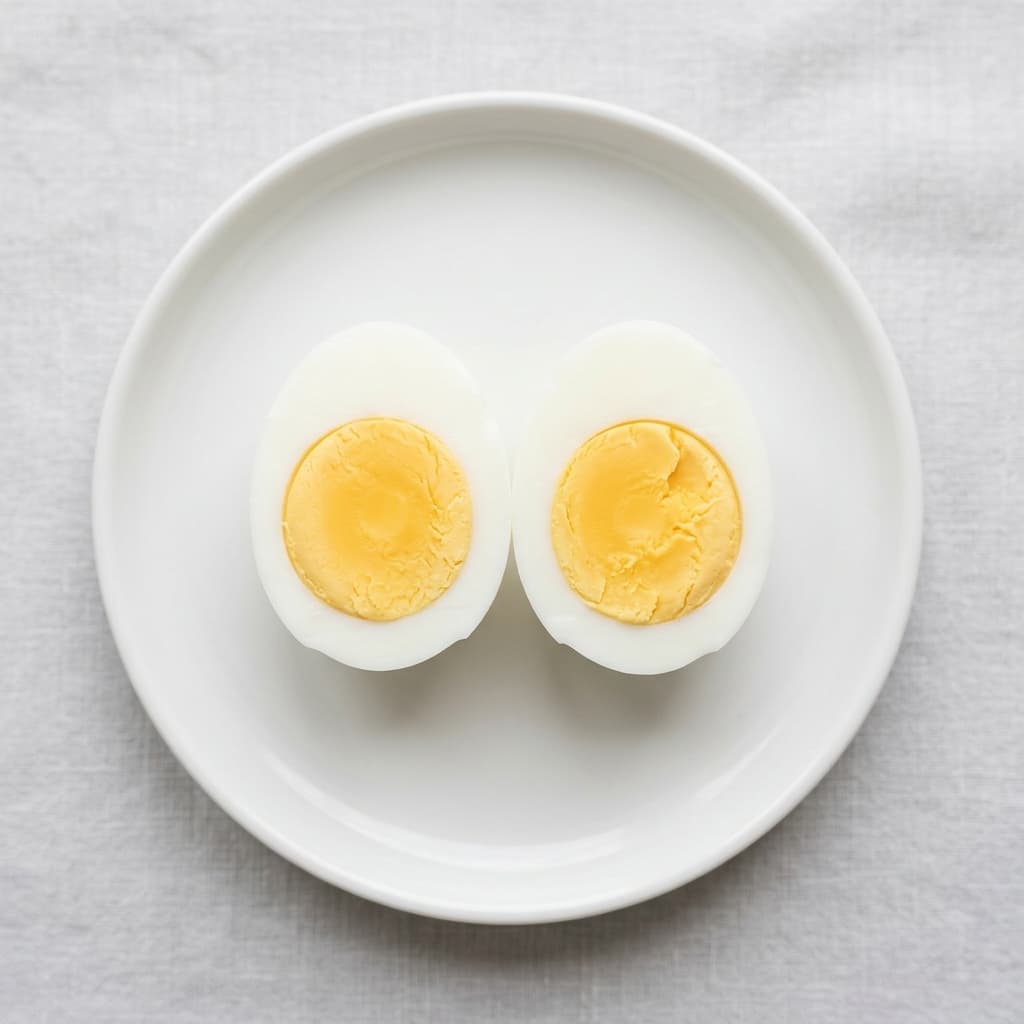
Albumen (Egg White): Four Protein Zones
Albumen is ~88% water and ~11% protein, organized into outer thin, thick, inner thin, and chalaziferous zones. Ovalbumin (54%), ovotransferrin (12%), and ovomucin (3.5%) drive gelling and foaming.
Key components
- •Thick albumen (~57% of white): ovomucin gel — stands tall when fresh
- •Thin albumen: more fluid layers inner and outer
- •Chalazae: twisted ovomucin anchors (see next card)
- •Log as FDC 172183: ~17 kcal, ~3.6g protein per Large white
Kitchen & logging note
Fresh thick white = compact poached eggs and stable meringues. Aging thins the white as pH rises and ovomucin breaks down.
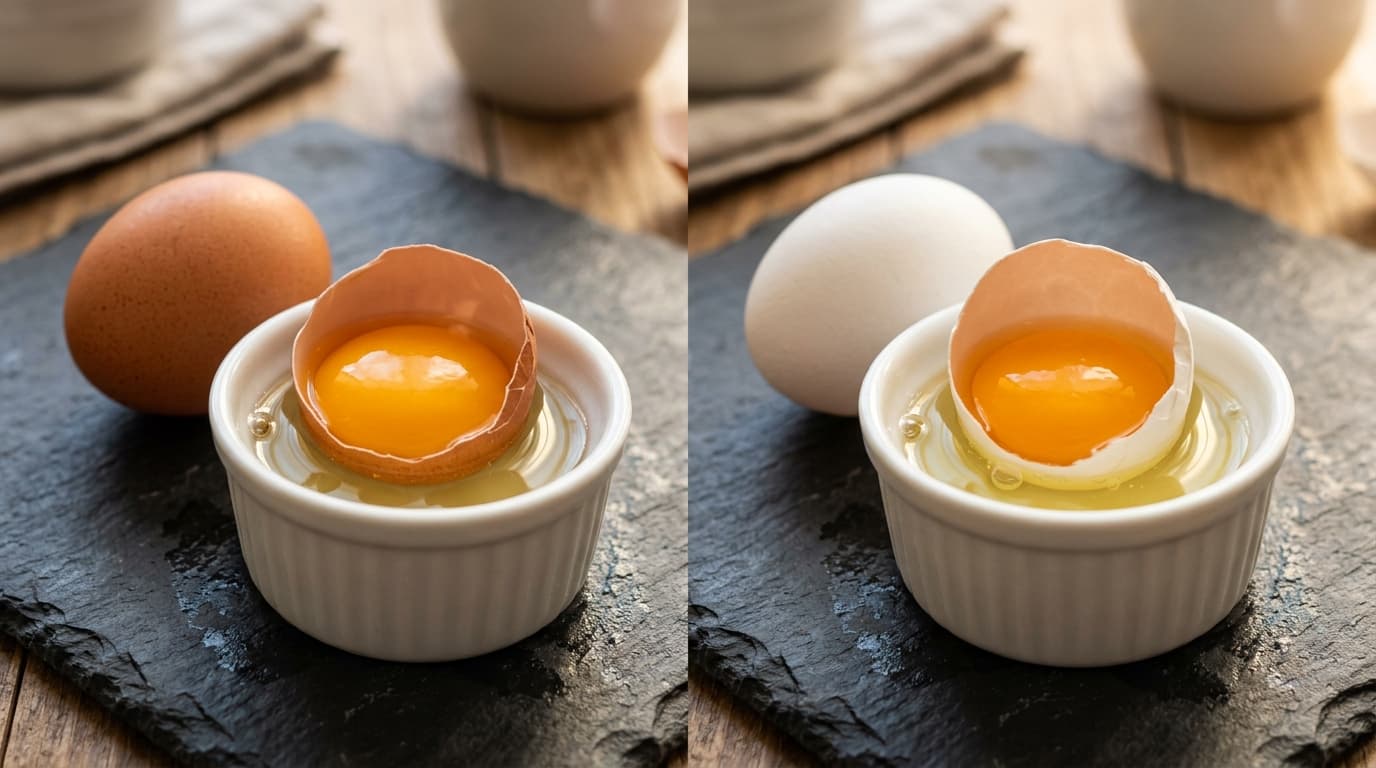
Chalazae & Vitelline Membrane
Chalazae are two twisted protein cords anchoring the yolk in the center of the egg. The vitelline membrane is a thin elastic casing around the yolk that weakens as water migrates inward during storage.
Key components
- •Chalazae: dense ovomucin fibers — edible, not an embryo
- •Vitelline membrane: glycoprotein envelope maintaining yolk shape
- •Germinal disc: tiny pale spot on yolk surface (genetic material)
Kitchen & logging note
Prominent chalazae = fresh egg. Strain through a sieve for mirror-smooth custards. Does not change USDA macro values whether left in or removed.
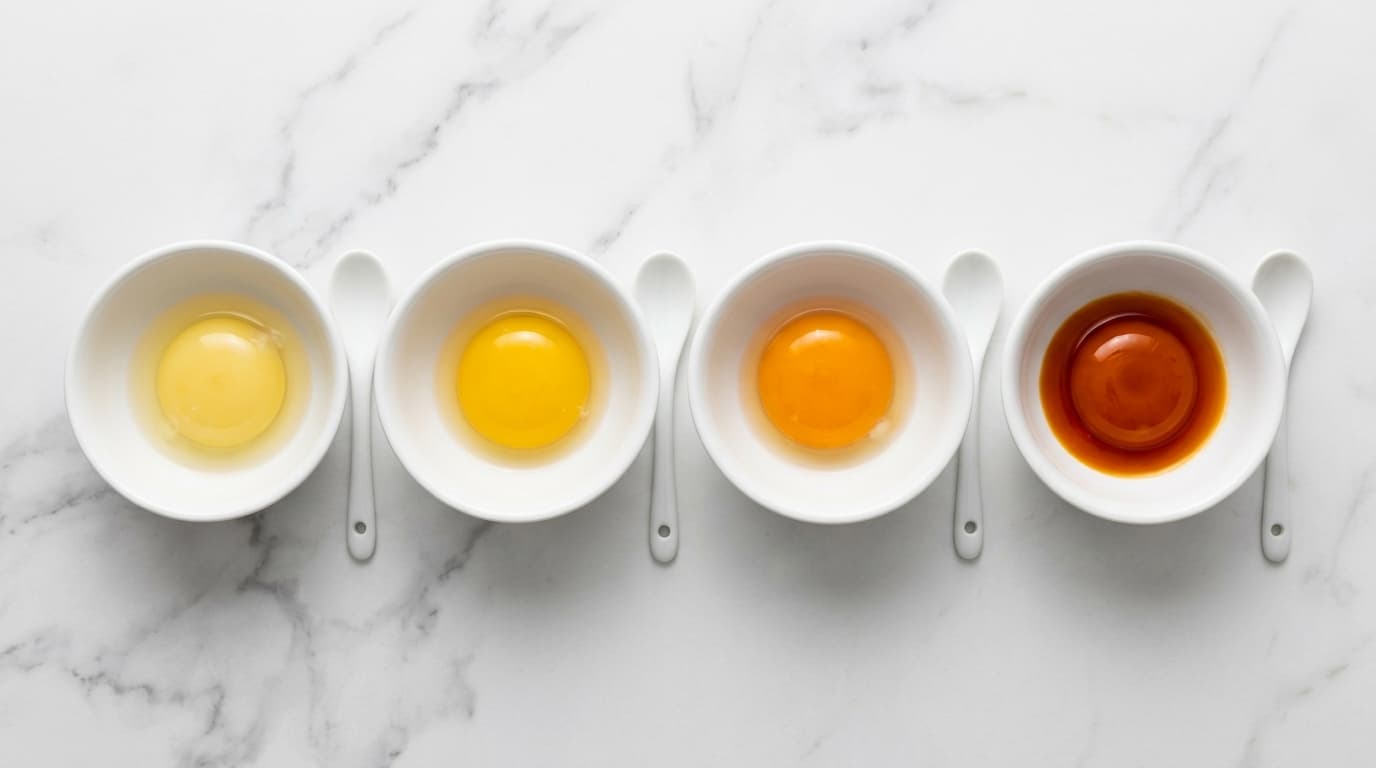
Yolk (Vitellus): Lipid Emulsion
The yolk delivers ~55 of 72 kcal per Large egg, plus virtually all fat, cholesterol, choline, and fat-soluble vitamins (A, D, E, K). Lipids exist as lipoprotein particles — lecithin (phosphatidylcholine) emulsifies sauces.
Key components
- •Triglycerides (~66% of yolk fat): energy-dense storage lipids
- •Phospholipids / lecithin (~28%): natural emulsifier
- •Lipovitellins & phosvitin: major yolk proteins
- •Carotenoids (lutein, zeaxanthin): yolk color from feed
Kitchen & logging note
Log as FDC 172184: ~55 kcal, ~4.5g fat, ~2.7g protein per Large yolk. Yolk color reflects feed pigments — not a different macro profile when rations match.
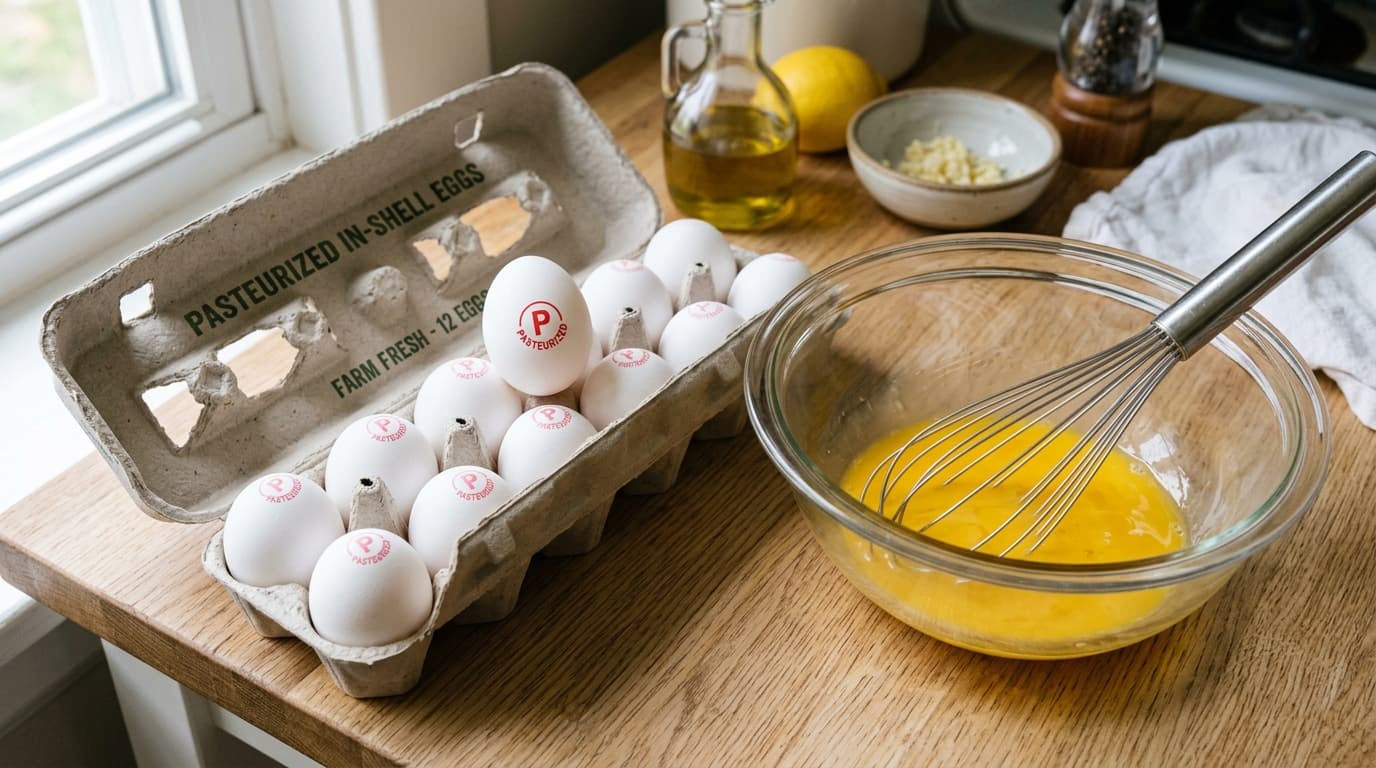
Heat, Foam & Emulsion Chemistry
White proteins coagulate from ~62°C (ovotransferrin) to ~84°C (ovalbumin). Yolk sets ~65–70°C. Whisking denatures white proteins to trap air; yolk lecithin stabilizes oil-in-water emulsions.
Key components
- •Meringue: denatured ovalbumin at air-water interface — keep yolk fat out
- •Custard: diluted eggs with milk/sugar raise coagulation threshold
- •Mayonnaise: yolk lecithin coats oil droplets at the water boundary
- •Green ring on overcooked eggs: iron-sulfur reaction — harmless, stops in ice bath
Kitchen & logging note
Use the explorer below for protein coagulation notes, size scaling, and a storage-age simulator for peel and poach behavior.
What Changes During Refrigerated Storage
Uncracked eggs undergo predictable physical shifts through shell pores. These are kitchen quality cues — USDA macro values for logging whole eggs stay on the FDC baseline.
Peak fresh (Grade AA)
- • pH 7.6–8.2; air cell < 3 mm
- • Thick white stands tall
- • Best for: poaching, sunny-side-up
Standard table (Grade A)
- • pH rises toward 9.0; air cell expands
- • Thick white thins; yolk membrane softens
- • Best for: scrambles, baking, omelets
Aged refrigerated (Grade B)
- • pH 9.3+; watery white, flat yolk
- • Air cell enlarged; float test positive
- • Best for: hard-boiled (easy peel)
More on shelf life: How long do eggs last →
Egg Anatomy & Composition Explorer
Inspect egg layers, scale macros by USDA egg size, review protein coagulation notes, and simulate how refrigerated storage changes texture. Informational only — not dietary advice.
Select an anatomical layer to see its structural role and kitchen implications:
Middle Thick Albumen (Gel White)Complete Uncropped View
Elevated firm gel ring of thick albumen standing tall around raw egg yolk
Middle Thick Albumen (Gel White)
Molecular & Structural Biochemistry
Dense colloidal hydrogel with 4× the ovomucin microfibrillar network of thin albumen, trapping 88% water in an elastic matrix.
Structural Role in the Egg
Viscous gel matrix that cushions the yolk and holds albumen proteins in a stable colloidal structure.
Culinary Impact & Handling Rule
Governs frying and poaching aesthetics. Forms the tall, tight white halo in sunny-side-up eggs. Measures Haugh Unit freshness.
At a Glance
Shell eggs divide into shell (~10% in-shell weight), albumen (~66% of edible liquid), and yolk (~34%). The white is ~88% water with ~11% protein and virtually no fat; the yolk is a lipid-rich emulsion holding most calories, fat, and fat-soluble vitamins.
For logging: Whole egg = FDC 171287. Split entries use FDC 172183 (white) and 172184 (yolk). Prominent chalazae and tall thick albumen indicate freshness; aged eggs spread more and peel more easily when hard-boiled.
For cooking: White proteins foam and gel; yolk lecithin emulsifies sauces. See the interactive explorer for layer details and size scaling.
Reference Serving
Log whole eggs at 50g edible; split white (~33g) and yolk (~17g) when tracking separately.
USDA reference data assigns ~17 kcal to the white and ~55 kcal to the yolk per Large egg. White proteins (ovalbumin, ovomucin) drive meringues; yolk lipoproteins and lecithin stabilize mayonnaise and custards.
Storage shifts pH and albumen thickness over time — a kitchen quality signal, not a nutrition change for standard logging. Informational only — not dietary advice.
Egg Anatomy: Weight Proportions & Kitchen Roles
| Nutrient | Component | Weight % (Large) | Typical Weight | Key Constituents | Logging / Kitchen Note |
|---|---|---|---|---|---|
| Cuticle (Bloom) | <0.5% | ~0.1g | Waxy glycoproteins | Natural pore seal; removed in US commercial washing | |
| Eggshell | ~10% in-shell | ~5.5–6g | 94–96% CaCO₃, protein matrix | Not logged as food; governs moisture loss through pores | |
| Shell Membranes | ~1% | ~0.5g | Collagen-like fibers | Separate at blunt end to form the air cell | |
| Air Cell | Variable | 2–6+ mm depth | Air + water vapor | Expands with age; used in USDA grading | |
| Outer Thin Albumen | ~23% of white | ~7.5g | Ovalbumin, water | Spreads in pan; strain for neat poached eggs | |
| Thick Albumen | ~57% of white | ~19g | Ovomucin gel network | Stands tall when fresh; key for poaching height | |
| Inner Thin Albumen | ~17% of white | ~5.5g | Dissolved peptides | Fluid layer around yolk | |
| Chalazae | ~3% of white | ~1g | Twisted ovomucin fibers | Freshness indicator; edible; safe to leave in or strain out | |
| Vitelline Membrane | <1% | ~0.2g | Glycoprotein casing | Weakens with age; yolks break more easily when older | |
| Yolk (Vitellus) | ~34% edible | ~17g | Lipoproteins, lecithin, carotenoids | Log ~55 kcal and most fat per Large egg |
Proportions for USDA Large (56.7g in-shell, 50g edible). See Egg Sizes & Weights for other sizes.
White vs. Yolk vs. Whole Egg (per 100g edible, USDA FDC)
| Nutrient | Constituent | Whole Egg (171287) | Egg White (172183) | Egg Yolk (172184) | Logging Note |
|---|---|---|---|---|---|
| Water | 75.8g | 87.6g | 52.3g | White is mostly water; yolk is a concentrated emulsion | |
| Protein | 12.6g | 10.9g | 15.9g | Yolk is denser in protein per gram; white contributes more total grams | |
| Total Fat | 9.5g | 0.17g | 26.5g | ~99% of egg fat is in the yolk | |
| Calories | 143 kcal | 52 kcal | 322 kcal | Large egg ≈ 72 kcal: ~17 white + ~55 yolk | |
| Cholesterol | 372 mg | 0 mg | 1,085 mg | Log with yolk-only entries; none in whites | |
| Natural pH (fresh → aged) | 7.2–8.8 | 7.6 → 9.2+ | 6.0–6.2 | White alkalinizes as CO₂ escapes through shell pores |
Values from USDA FoodData Central. Per-egg portions scale with Weight of Egg White and Weight of Egg Yolk guides.
Major Egg Proteins: Coagulation & Culinary Role
| Nutrient | Protein | % of Fraction | Coagulation Temp | Culinary Role |
|---|---|---|---|---|
| Ovalbumin (white) | 54% | 84°C (183°F) | Main gelling and foaming protein in baked goods | |
| Ovotransferrin (white) | 12% | 61–65°C (142–149°F) | First white protein to set; soft gel formation | |
| Ovomucoid (white) | 11% | Heat stable (>100°C) | Maintains viscosity; resists boil breakdown | |
| Ovomucin (white) | 3.5% | Heat-resistant gel | Thick albumen structure; freshness indicator | |
| Lysozyme (white) | 3.5% | 75°C (167°F) | Foaming complex with ovomucin | |
| Lipovitellins (yolk) | ~68% yolk protein | 65–70°C (149–158°F) | Custard and sauce gelling | |
| Phosvitin (yolk) | ~11% yolk protein | Heat resistant | Iron-binding phosphoprotein in yolk matrix |
Coagulation temperatures are approximate culinary reference points. Source: Mine (2002), USDA FDC protein profiles.
How Egg Parts Drive Cooking Outcomes
| Nutrient | Property | Primary Component | Typical Conditions | Kitchen Application |
|---|---|---|---|---|
| Emulsification | Yolk lecithin & lipovitellins | Room temp; slow oil whisking | Mayonnaise, hollandaise, aioli | |
| Foaming | Ovalbumin & ovomucin (white) | Acid lowers pH; zero yolk fat | Meringues, soufflés, angel food cake | |
| Heat coagulation | Ovotransferrin (white) + yolk lipoproteins | White sets ~62°C; yolk ~65–70°C | Custards, quiches, pasta dough | |
| Clarification | Albumen proteins | Gentle heat 60–65°C | Consommé, fining broths | |
| Tenderizing in baking | Yolk lipids | Oven 163–191°C (325–375°F) | Brioche, pound cake, soft cookies |
What Makes Up a Shell Egg
A chicken egg is a layered package: mineral shell, protein membranes, multi-zone albumen, and a lipid-rich yolk. For food diary logging, the practical split is whole egg (FDC 171287), white only (172183), or yolk only (172184).
The visual guide above walks through each layer with photos. Use the interactive explorer below to inspect layers, scale macros by egg size, and see how refrigerated storage changes albumen thickness and air cell size.
- Large baseline: 50g edible = ~33g white + ~17g yolk (72 kcal, 6.3g protein)
- Chalazae: edible protein anchors — not an embryo; prominent cords = fresh egg
- Aging signals: spreading white, larger air cell, easier hard-boiled peel — kitchen quality cues only
Shell, Cuticle & Membranes
The shell is ~94–96% calcium carbonate with thousands of microscopic pores for gas exchange. The natural cuticle (bloom) seals pores on freshly laid eggs; US commercial washing removes it, so eggs are sold refrigerated per USDA guidance.
Two protein membranes sit beneath the shell. They separate at the blunt end as the egg cools after laying, forming the air cell — the main visual freshness indicator used in USDA grading.
Albumen (Egg White): Layers & Proteins
Albumen is ~88% water and ~11% protein, organized into outer thin, thick, inner thin, and chalaziferous zones. Thick albumen stands tall in fresh eggs; as CO₂ escapes and pH rises, ovomucin gels break down and the white spreads.
For logging, one Large white ≈ 33g, ~17 kcal, ~3.6g protein (FDC 172183). For meringues, keep bowls free of yolk fat and consider a pinch of cream of tartar to stabilize foam.
Yolk: Lipids, Lecithin & Logging
The yolk holds ~55 kcal of a Large egg’s 72 kcal, plus virtually all fat, cholesterol, choline, and fat-soluble vitamins (A, D, E, K). Yolk lipids exist as lipoprotein particles — lecithin (phosphatidylcholine) is what emulsifies oil and water in mayonnaise and hollandaise.
One Large yolk ≈ 17g, ~4.5g fat, ~2.7g protein (FDC 172184). Yolk color reflects feed carotenoids, not a different macro profile when hens eat similar rations.
Common Misconceptions
Myth: The chalaza is a developing chick or a defect.
Fact: Chalazae are twisted ovomucin protein cords that center the yolk. They are edible and indicate a fresh egg — not fertilization.
Myth: Almost all protein is in the white.
Fact: The white contributes more total protein grams (~3.6g vs ~2.7g per Large egg) because it is larger, but the yolk is denser in protein per gram (15.9% vs 10.9% per 100g).
Myth: Cloudy egg white means the egg is bad.
Fact: Cloudiness often indicates dissolved CO₂ in a fresh egg. As eggs age, CO₂ escapes and whites look clearer.
Myth: Dark orange yolks always mean more protein or calories.
Fact: Yolk color comes from feed carotenoids. Same-size yolks from hens on matched rations log similar macros.
Myth: The air cell means something entered the egg.
Fact: The air cell forms when the egg cools after laying and contents contract. It expands as water slowly evaporates through shell pores.
Practical Notes for Tracking
- •Log Large eggs at 50g edible (FDC 171287); split ~33g white and ~17g yolk when tracking parts separately.
- •Refrigerate eggs at ≤40°F (4°C) in the original carton per USDA handling guidance.
- •Use fresh eggs (prominent chalazae, tall thick white) for poaching and frying.
- •Use older refrigerated eggs for hard-boiling — higher pH helps shells peel cleanly.
- •Strain yolks through a fine sieve for smooth custards; keep yolk fat out of meringue bowls.
Informational only — for personal nutrition awareness and journaling. Not personalized dietary advice. Disclaimer
Frequently Asked Questions
Scientific References & Data Sources
Nutrition values on this page are derived from the peer-reviewed sources below. This page is for informational food logging and personal awareness only. See our disclaimer.
Federal regulations defining shell egg grades (AA, A, B), air cell depth measurements, and albumen firmness requirements.
Federal guidance on shell egg refrigeration, cooking until firm, and consumer handling.
Analytical nutrient baseline for standard Large raw whole chicken eggs (50g edible portion).
Chemical and macronutrient profile of raw fresh chicken egg albumen (33g per Large egg).
Chemical and lipid profile of raw fresh chicken egg yolk (17g per Large egg).
Peer-reviewed overview of eggshell structure, albumen and yolk composition, and egg quality assessment.
Review of egg white foaming, yolk emulsification, and protein coagulation in culinary applications.
Industry reference for egg anatomy parts, white/yolk proportions, and functional properties.
Our data sourcing, verification, and fact-checking methodology.