Egg Yolk Colors: Nutrition, Carotenoids & DSM Color Fan Guide
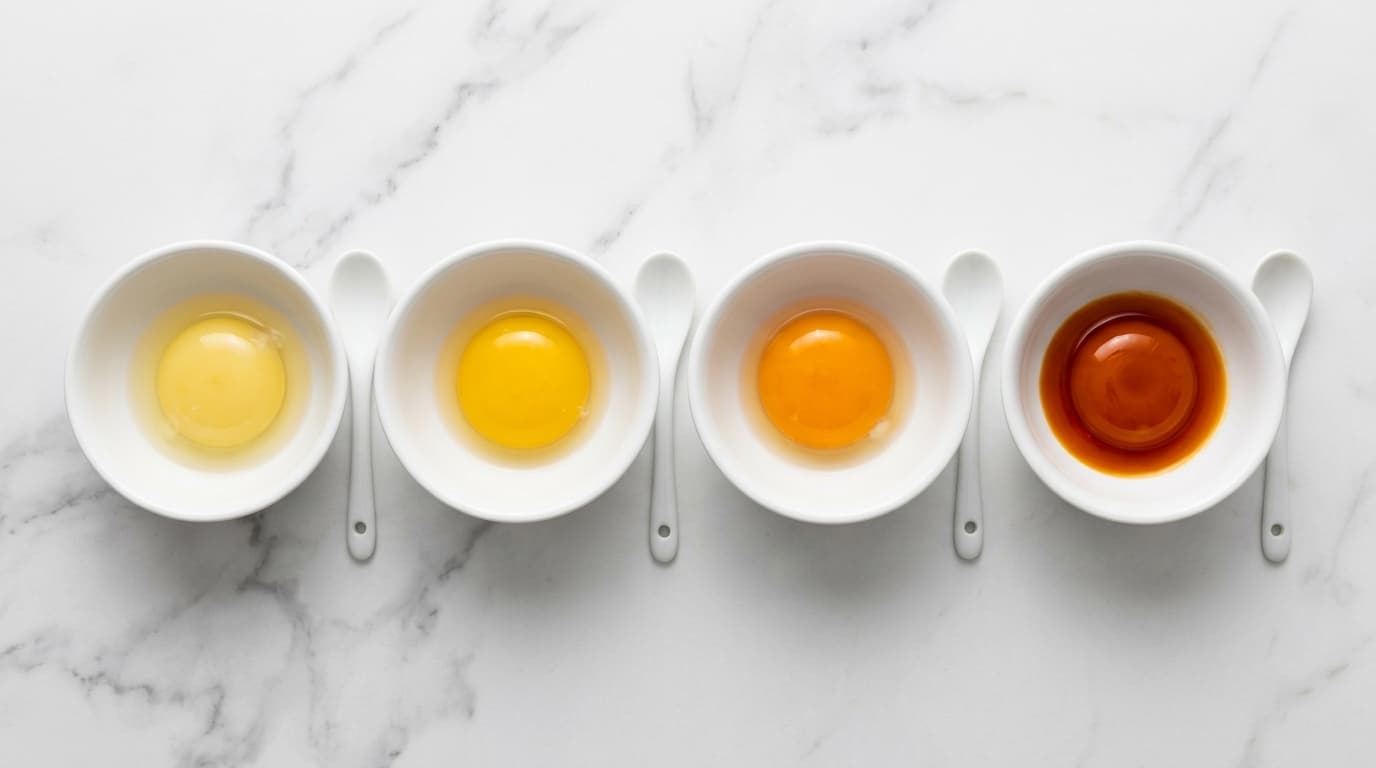
Direct answer
Yolk color is 100% from hen feed carotenoids, not breed. Every Large yolk has about 55 kcal, 2.7g protein, 4.5g fat (USDA FDC 172184) whether pale or deep orange. Dark orange yolks can carry 2×–4× more lutein because the same feed pigments deepen both color and carotenoid content. Orange does not prove pasture — marigold and paprika in indoor feed can match the shade. A green ring on hard-boiled yolks is harmless ferrous sulfide from overcooking.
Informational journaling reference only — not medical or dietary advice.
Egg Yolk Colors: Feed Science & Kitchen Guide
Six focused guides on diet-driven pigmentation, the DSM fan, logging, and cooking.
The Carotenoid Spectrum: 100% Diet-Driven Pigmentation
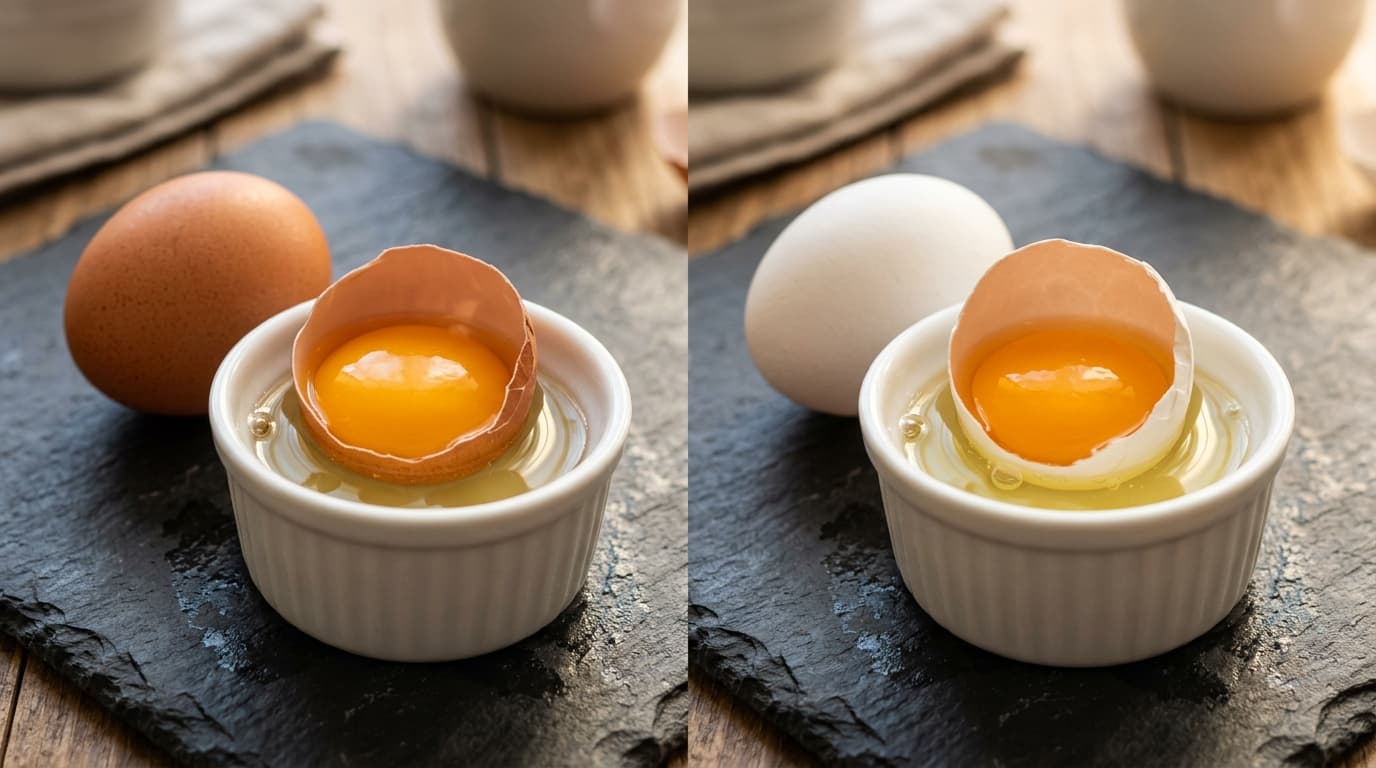
Layer hens cannot manufacture carotenoid pigments within their bodies. From light pastel yellow to deep sunset amber, every hue in the yolk is deposited directly from feed ingredients (corn, alfalfa, grass, marigolds, or paprika).
Biochemical Carotenoid Deposition
- •Xanthophyll absorption occurs in the small intestine via mixed lipid micelles.
- •Hens package carotenoids into portomicrons (avian chylomicrons) for liver processing.
- •The liver synthesizes vitellogenin and VLDLy, depositing pigment into yolk spheres.
- •Breed genetics govern shell color (brown/blue), but have zero effect on yolk hue.
Consumer & Kitchen Takeaways
- ✓A white Leghorn and brown Rhode Island Red on identical feed lay identical yolk colors.
- ✓Dietary shifts take 3–5 days to begin appearing and 10–14 days for full saturation.
- ✓Pale yolks simply mean low-xanthophyll grains in feed.
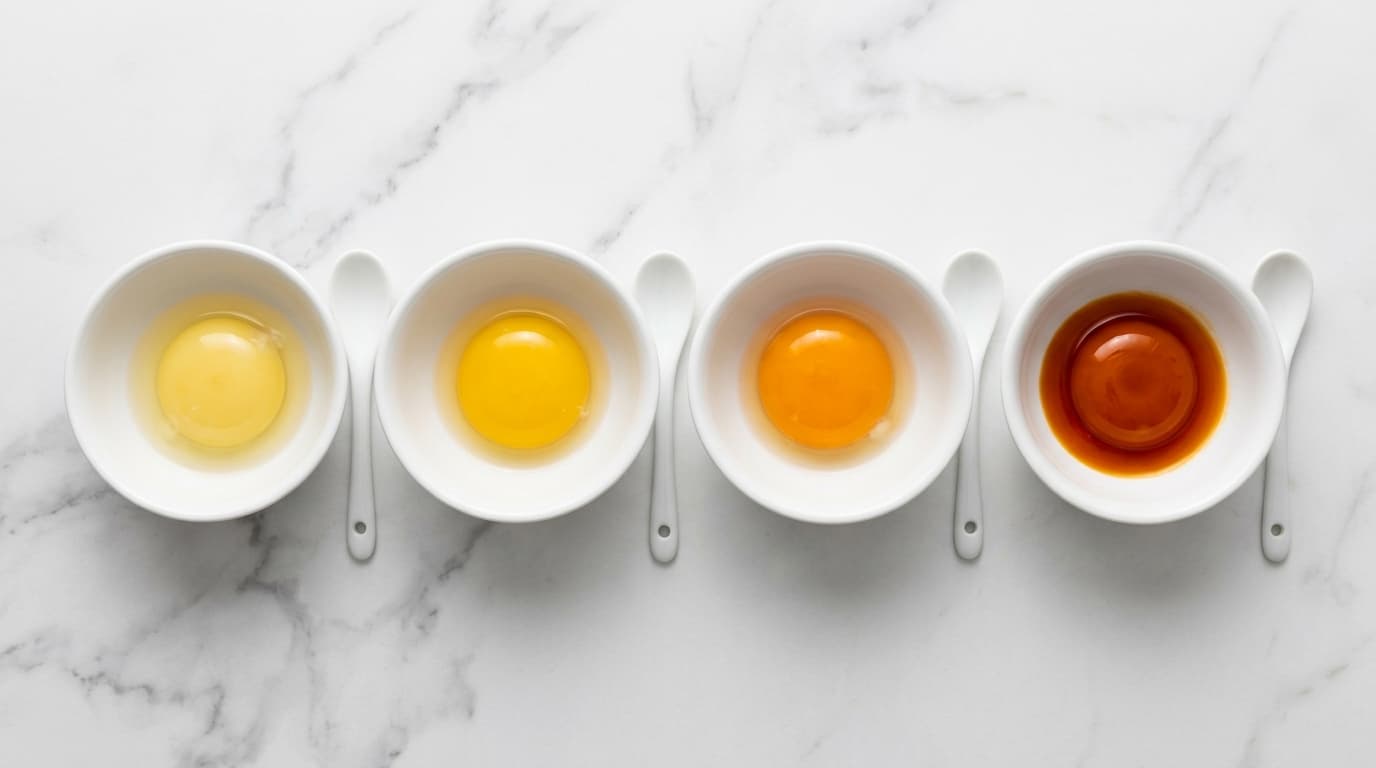
The DSM Yolk Color Fan: Global Standards & Market Preferences
Developed in the 1960s by Roche and refined by DSM, the 16-blade Yolk Color Fan is the worldwide industry benchmark for assessing egg quality, export contracts, and consumer color preferences.
Industry Color Standards
- •Evaluated under standardized D65 daylight to eliminate incandescent lighting bias.
- •Blades 1–4 indicate wheat, barley, or sorghum feeds devoid of yellow pigment.
- •Blades 5–8 represent standard yellow field corn and soybean meal rations.
- •Blades 12–16 require red xanthophylls (capsanthin from paprika) alongside lutein.
Market Culture Insights
- ✓US consumers historically preferred lemon to golden-yellow breakfast yolks.
- ✓German and Mediterranean markets strongly favor rich orange yolks for pastry.
- ✓Japanese "jidori" and onsen eggs target fiery amber hues (DSM 15–16) for raw rice bowls.
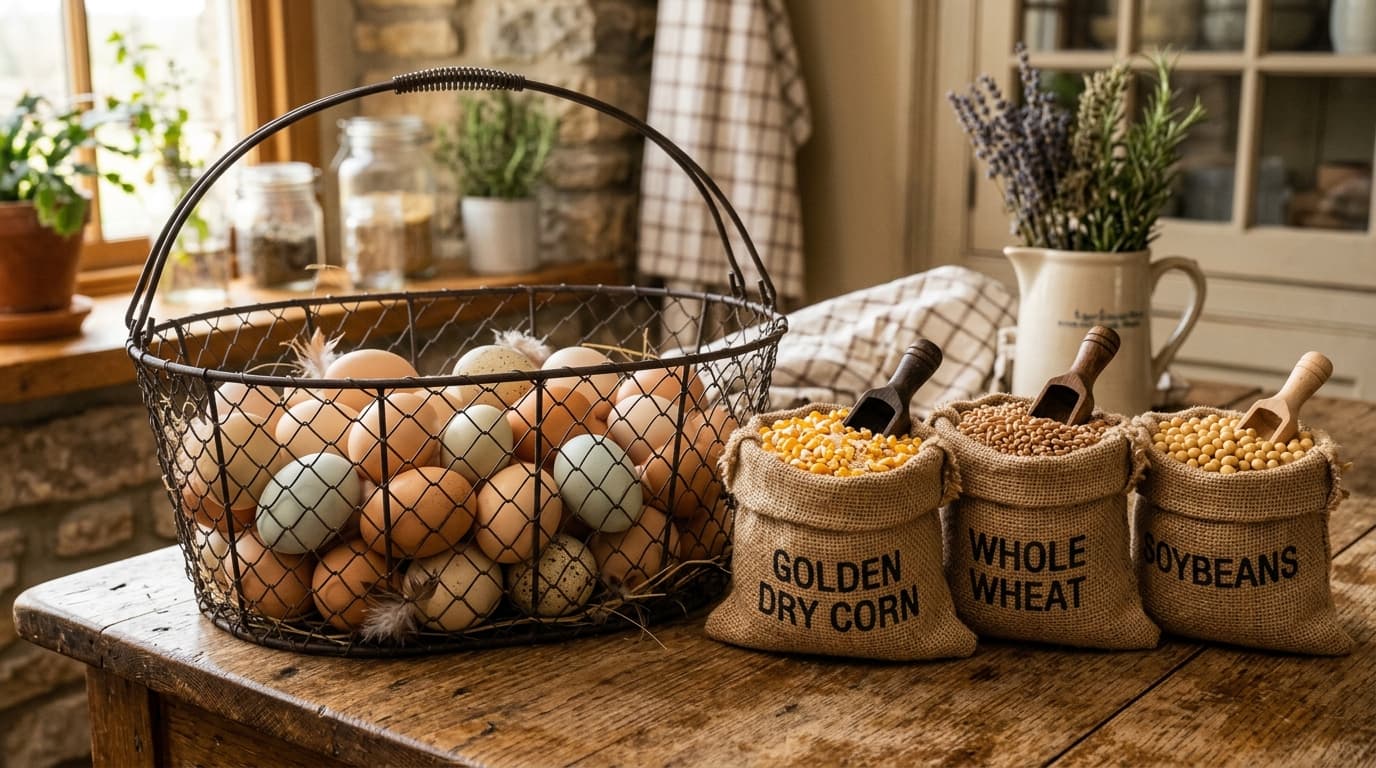
Feed Chemistry: Yellow vs. Red Carotenoid Sources
Yellow xanthophylls (lutein, zeaxanthin) create a golden foundation up to DSM 10. To achieve deep reddish-orange tones (DSM 12–16), hens must consume red xanthophylls (capsanthin/capsorubin) from red peppers or natural paprika extract.
Pigmenting Agent Potency
- •Yellow corn delivers 15–20 mg xanthophyll/kg; primarily zeaxanthin and lutein.
- •Dehydrated alfalfa meal provides 150–250 mg/kg; acts as natural pasture surrogate.
- •Marigold meal (Tagetes erecta) contains up to 10,000 mg/kg of concentrated lutein.
- •Paprika extract (Capsicum annuum) delivers intense red capsanthin to shift hue to orange.
Logging Takeaways
- ✓Yolk lutein sits in phospholipid fats — useful context when journaling carotenoid intake.
- ✓Commercial feeds use natural plant extracts (marigold, paprika), not synthetic food dyes.
- ✓Backyard treats with red peppers can deepen yolk color through capsanthin in feed.
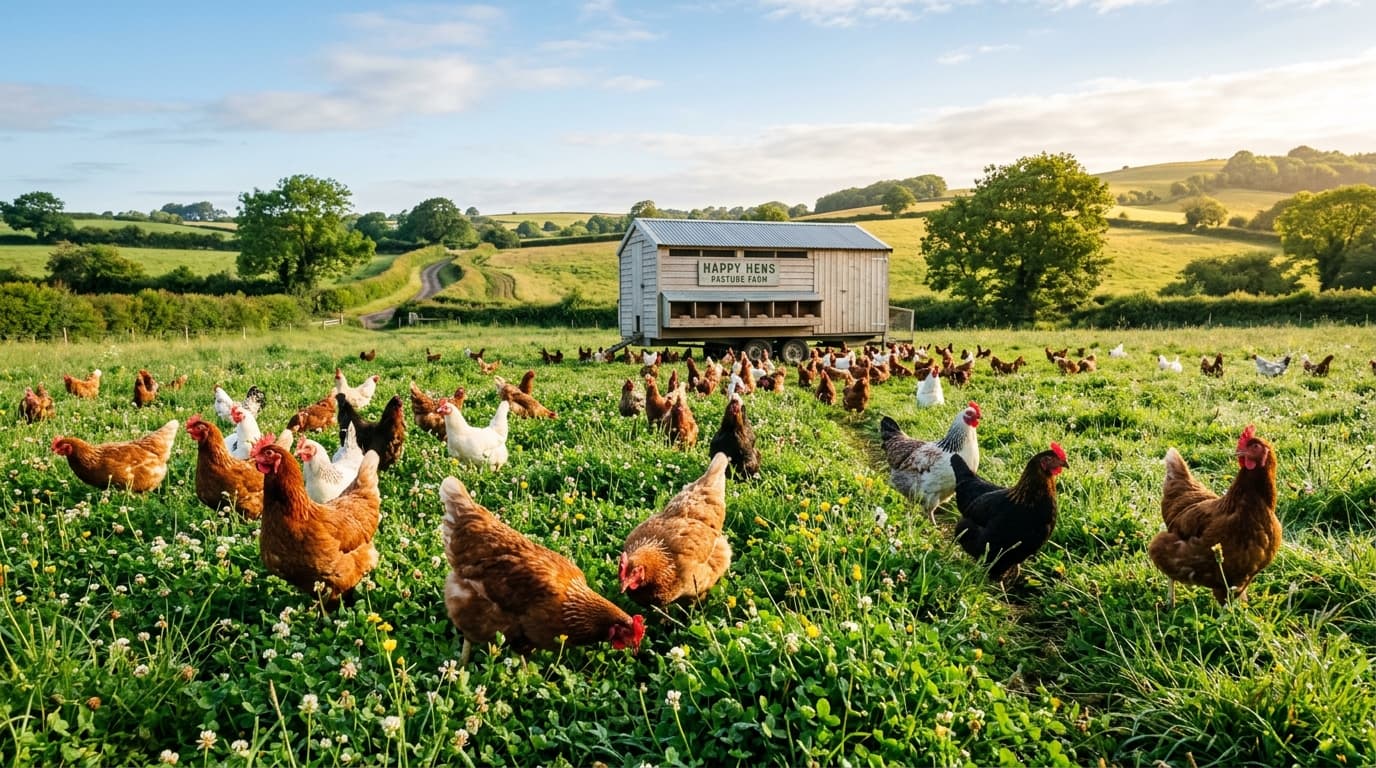
The Orange Myth: Pasture Welfare vs. Marigold Feed Additives
A vibrant orange yolk does NOT prove a hen roamed outdoors on green grass. Commercial indoor egg farms routinely add natural marigold and paprika extracts to achieve a DSM 13+ hue. Look for Certified Humane stamps to verify welfare.
Pasture Welfare vs Feed Formulation
- •Pasture foraging deposits natural wild carotenoids along with sunlight-derived Vitamin D3.
- •Indoor caged or cage-free hens on marigold extract lay identical DSM 13+ orange yolks.
- •Macronutrients (55 kcal, 2.7g protein, 4.5g fat) do not change regardless of yolk color.
- •Third-party audits (Certified Humane 108 sq ft) confirm animal welfare, not yolk color.
Smart Shopping Advice
- ✓Do not assume cheap supermarket eggs with orange yolks came from pasture-raised hens.
- ✓Pasture systems may show higher omega-3 and vitamin D3 in some farm data — varies by flock.
- ✓Check housing certifications rather than yolk color alone when choosing eggs.
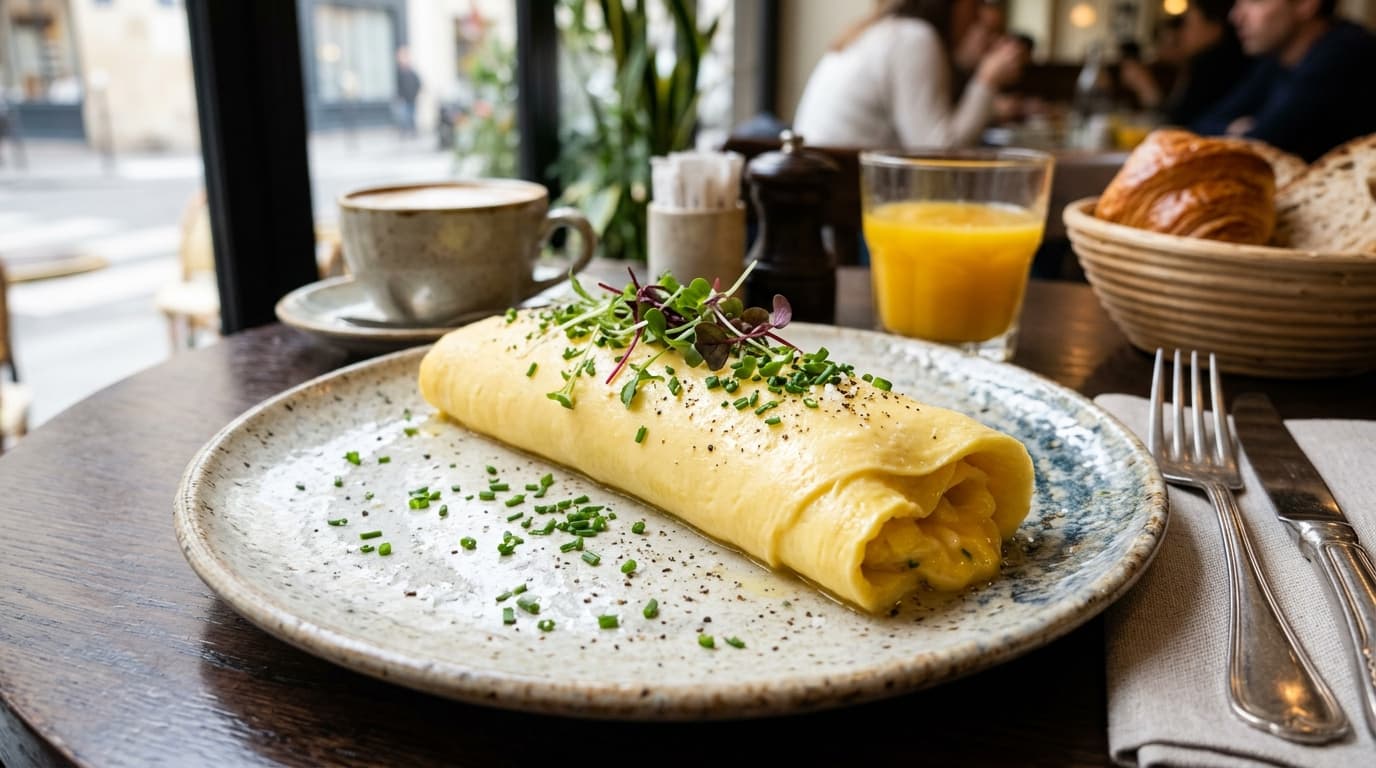
Culinary Aesthetics: Transforming Pasta, Cakes & Hollandaise
In blindfolded sensory trials, dark orange yolks taste identical to yellow yolks. However, in fine dining, deep orange yolks provide spectacular natural coloring for handcrafted pasta, brioche, crèmes brûlées, and sauces.
Culinary Color Physics
- •Carotenoids dissolve in yolk triglycerides, dispersing evenly through gluten starches.
- •Natural lutein and capsanthin withstand baking temperatures up to 350°F (177°C).
- •Eliminates the need for artificial food colorings (Yellow #5) in commercial bakeries.
- •Emulsions (mayonnaise, hollandaise) showcase deep, buttery, spoonable golden tones.
Chef Formulation Tips
- ✓Use DSM 12+ yolks for handmade tagliatelle and ravioli to achieve Italian pasta bar color.
- ✓In custards and lemon curd, orange yolks yield a mirror-smooth, luxurious appearance.
- ✓Fried sunny-side-up orange eggs provide striking contrast atop artisan avocado toast.
The Hard-Boiled Green Ring: Ferrous Sulfide Chemistry & Prevention
The unsightly greenish-gray ring encircling hard-boiled yolks is ferrous sulfide (FeS), created when heat drives sulfur from the white into the yolk's iron. It is non-toxic and eliminated by rapid ice-bath cooling.
Ferrous Sulfide (FeS) Reaction Chemistry
- •Albumen heat denatures sulfur amino acids (cysteine/methionine), releasing H2S gas.
- •H2S gas diffuses inward toward the cooler yolk center, contacting iron (Fe2+) ions.
- •Spontaneous chemical precipitation: H2S + Fe2+ → FeS (dark gray-green precipitate) + 2H+.
- •Slow ambient cooling prolongs reaction time; rapid ice shock halts gas diffusion.
Kitchen Prevention Rules
- ✓Boil Large eggs for 9 to 10 minutes maximum; never leave boiling on high heat.
- ✓Submerge immediately in a prepared ice water bath (50% ice, 50% water) for 5 minutes.
- ✓The green ring is safe to eat and does not indicate spoilage or bad farm quality.
Egg Yolk Color & Carotenoid Logging Tool
Explore the DSM 1–16 fan, simulate feed effects on color, log lutein by tier, and estimate green-ring risk when boiling. Informational only.
DSM 10: Golden Orange
At a Glance
Hens cannot make carotenoids on their own — yolk shade (DSM 1–16) comes from feed xanthophylls. Protein (2.7g) and fat (4.5g) stay identical; dark orange yolks can carry more lutein and zeaxanthin. Orange color does not prove pasture — marigold and paprika in indoor feed can match the same hue.
DSM Yolk Color Fan Spectrum
Hen diet sources & carotenoid levels
| DSM Score Tier | Primary Hen Diet | Lutein / Yolk |
|---|---|---|
| DSM 1 to 4 (Pale Yellow) | Wheat, barley, white corn, sorghum | 120–180 mcg |
| DSM 5 to 8 (Standard Yellow) | Yellow field corn + soybean meal | 200–280 mcg |
| DSM 9 to 11 (Golden Orange) | Corn + alfalfa or marigold extract | 300–400 mcg |
| DSM 12 to 14 (Deep Orange) | Pasture forage OR marigold feed | 400–500 mcg |
| DSM 15 to 16 (Reddish-Amber) | Marigold + paprika/capsicum extract | 500–600+ mcg |
Same Macros, Different Carotenoids — Color Is Feed, Not Breed
Yolk color maps to DSM fan scores 1–16 from hen feed xanthophylls. Calories (55 kcal), protein (2.7g), and fat (4.5g) stay identical per Large yolk. Deep orange yolks can deliver 2×–4× more lutein and zeaxanthin (350–500+ mcg vs 150–250 mcg) depending on feed. A dark orange yolk alone does not prove pasture living — marigold and paprika extracts in indoor feed can produce the same hue.
Kitchen note: The gray-green ring on hard-boiled yolks is harmless ferrous sulfide from overcooking above ~158°F (70°C). Boil Large eggs 9–10 minutes and plunge into ice water to prevent it.
DSM Yolk Color Fan (1–16): Diet Sources & Market Context
| Nutrient | DSM Fan Score | Color Appearance | Primary Hen Diet Source | Dominant Carotenoids | Consumer Market Preference |
|---|---|---|---|---|---|
| DSM 1 to 4 | Pale Straw to Lemon Yellow | Wheat, barley, sorghum, white corn, oats (low xanthophyll) | Traces of lutein (<150 mcg) | Northern Europe, parts of UK, Africa, Australia wheat belt | |
| DSM 5 to 7 | Soft Butter Yellow | Standard yellow field corn + soybean meal (baseline US feed) | Yellow lutein + zeaxanthin (150–250 mcg) | Standard US supermarket conventional eggs | |
| DSM 8 to 10 | Rich Golden Yellow | Yellow corn + dehydrated alfalfa meal + corn gluten meal | Lutein + zeaxanthin + cryptoxanthin (250–350 mcg) | Traditional US preference; cage-free commercial standard | |
| DSM 11 to 13 | Deep Golden Orange | Rotational pasture grazing (grass, clover) OR marigold extract | High lutein + zeaxanthin (350–450 mcg) | Premium US pasture-raised, France, Germany, Italy | |
| DSM 14 to 16 | Intense Reddish-Orange / Amber | High marigold petal meal (yellow) + paprika/capsicum extract (red) | Lutein + zeaxanthin + capsanthin + capsorubin (450–600+ mcg) | Japan (onsen eggs), Spain, high-end pastry bakeries |
Measured with the dsm-firmenich YolkFan™ (formerly Roche Yolk Colour Fan). Scores 1–16 reflect visual blade match under standardized daylight.
Carotenoid & Micronutrient Levels Across Yolk Color Tiers
| Nutrient | Nutrient Metric (Per 17g Large Yolk) | Pale Yellow (DSM 3–4) | Standard Yellow (DSM 7–8) | Golden Orange (DSM 11–12) | Deep Reddish-Orange (DSM 15–16) | Variance by Color |
|---|---|---|---|---|---|---|
| Calories (Energy) | 55 kcal | 55 kcal | 55 kcal | 55 kcal | Identical (0% difference) | |
| Complete Protein (g) | 2.70 g | 2.70 g | 2.70 g | 2.70 g | Identical across all colors | |
| Total Lipid (Fat) (g) | 4.51 g | 4.51 g | 4.51 g | 4.51 g | Identical lipid mass | |
| Cholesterol (mg) | 186 mg | 186 mg | 186 mg | 186 mg | Identical cholesterol content | |
| Lutein + Zeaxanthin (mcg) | 120–180 mcg | 220–280 mcg | 360–440 mcg | 480–600+ mcg | +250% to +400% in dark orange | |
| Red Carotenoids (Capsanthin) | Undetectable | Undetectable | Trace to 40 mcg | 120–250 mcg | Supplied by red pepper/paprika extract | |
| Vitamin A (RAE) (mcg) | 65 mcg | 72 mcg | 80 mcg | 88 mcg | Modest increase from beta-carotene conversion | |
| Vitamin D3 (Pasture vs Enriched) | 35–45 IU | 40–50 IU | 90–150 IU (if pasture) | 45–90 IU (diet dependent) | Pasture sunlight exposure can raise D3 | |
| Total Omega-3 (ALA/DHA) (mg) | 30–45 mg | 35–50 mg | 80–140 mg (pasture) | 50–80 mg | Elevated if pasture-foraging or flax-fed |
Macro baseline from USDA FDC 172184. Lutein tier ranges are feed-dependent estimates from poultry nutrition literature; they are not fixed FDC values per color shade.
Hen Feed Ingredients, Pigmenting Compounds & Deposition
| Nutrient | Feed Ingredient | Primary Active Pigment | Pigment Hue Imparted | Deposition Efficiency | Pasture / Commercial Relevance |
|---|---|---|---|---|---|
| Yellow Field Corn (Maize) | Zeaxanthin + Lutein | Soft to medium yellow | Moderate (40–60 mg xanthophyll/kg feed) | Baseline carbohydrate base of US poultry diets | |
| Dehydrated Alfalfa Meal | Lutein | Warm yellow-gold | High (150–250 mg xanthophyll/kg feed) | Traditional green forage replacer in winter feeds | |
| Fresh Pasture (Grass, Clover, Chicory) | Lutein + Beta-Carotene + Violaxanthin | Deep golden-orange | Variable (depends on season and grazing intake) | Pasture-raised systems; varies seasonally | |
| Marigold Petal Meal (Tagetes erecta) | Lutein Esters (trans-lutein) | Intense golden yellow / yellow-orange | Extremely high (5,000–10,000 mg/kg extract) | Natural botanic additive used widely in commercial feeds | |
| Paprika Extract (Capsicum annuum) | Capsanthin + Capsorubin | Vivid red-orange / amber | Extremely high (red hue booster) | Natural botanical used to push DSM score to 14–16 | |
| Wheat, Barley, Sorghum (Milo) | Virtually devoid of xanthophylls | Very pale, whitish-yellow | Near-zero pigment deposition | Common staple grain in UK, Canada, and Northern Europe |
Layer hens absorb dietary xanthophylls through intestinal micelles and deposit pigments into the yolk vitelline sphere over 10 to 14 days of ovum development.
Yolk Color Variations: Causes & Kitchen Notes
| Nutrient | Yolk Appearance | Likely Cause | Typical Use | Kitchen Note |
|---|---|---|---|---|
| Extremely Pale / White Yolk | Wheat/barley feed low in xanthophylls | Normal cooking and baking | Same calories and protein; lower lutein from feed | |
| Deep Sunset Red / Amber Yolk | Feed enriched with paprika or capsanthin extract | Gourmet baking, pasta, ramen | Natural feed pigment; prized for visual appeal | |
| Olive Green / Brownish Yolk (Raw) | Shepherd's purse, pennycress, or cottonseed meal in feed | Usually discarded for appearance | Unusual feed ingredient reaction with yolk iron | |
| Gray-Green Ring on Hard-Boiled Yolk | Overcooking above 158°F (70°C); sulfur + yolk iron forms FeS | Safe to eat; cosmetic only | Prevent with 9–10 min boil and immediate ice bath | |
| Red Blood Spot on Yolk Surface | Ruptured follicular capillary during ovulation; not fertility | Safe after cooking | Affects ~1% of eggs; remove with knife tip if desired | |
| Mottled Yolk Surface (Patchy Spots) | Water migration across vitelline membrane in older eggs | Cook thoroughly if used | Indicates reduced freshness or warm storage | |
| Pink or Pearlescent Tint | Spoilage; off-odor often present | Discard | Do not use eggs with unusual color, odor, or texture |
For logging and kitchen reference. When in doubt about an egg's appearance or smell, discard it.
Why Yolk Color Is 100% Diet — Not Breed or Freshness
Yolk color comes entirely from carotenoid pigments (xanthophylls) in hen feed. Chickens cannot synthesize these pigments; every shade from pale yellow to deep orange was deposited from ingredients like yellow corn, alfalfa, pasture greens, marigold petals, or paprika extract.
When a hen eats feed containing lutein, zeaxanthin, cryptoxanthin, capsanthin, or capsorubin, the pigments are absorbed with dietary fat in the small intestine, carried in lipid-rich portomicrons, and deposited into developing yolk spheres over a 10–14 day follicular cycle. Hen breed affects shell color (brown, white, blue) but has no effect on yolk hue.
Noticeable color shifts begin 3–5 days after a feed change and reach full saturation around days 10–14, when newly matured follicles reflect the updated diet.
- No genetic link: white Leghorn and brown Rhode Island Red on identical feed lay identical yolk colors.
- DSM fan scores 1–16 standardize visual assessment for trade and quality grading.
- Pale yolks mean low-xanthophyll feed (wheat, barley), not lower protein or calories.
The DSM Yolk Color Fan & Feed Sources That Shape Each Shade
The dsm-firmenich YolkFan™ (originally the Roche Yolk Colour Fan, 1960s) uses 16 calibrated blades from pale straw (score 1) to fiery reddish-orange (score 16). US supermarket eggs typically fall around DSM 7–9 from yellow corn and soybean rations; Germany, Italy, and Spain often prefer DSM 12–14; Japan targets DSM 14–16 for onsen eggs and raw-egg dishes.
Yellow xanthophylls (lutein, zeaxanthin) from corn and alfalfa create golden bases up to about DSM 10. Deep orange to amber (DSM 12–16) requires red xanthophylls (capsanthin from paprika) alongside yellow pigments. Marigold meal can supply concentrated lutein indoors; paprika extract shifts hue toward sunset orange without any pasture access.
- DSM 1–4: wheat, barley, sorghum — pale straw to lemon yellow.
- DSM 7–9: standard US yellow corn formulations — butter to golden yellow.
- DSM 12–16: pasture forage or marigold + paprika feed additives — deep orange to amber.
Macro Parity vs Carotenoid Logging — FDC 172184 Baseline
Dark orange yolks do not have more protein, fewer calories, or less cholesterol than pale yellow yolks. USDA FDC 172184 lists every standard 17g Large yolk at about 55 kcal, 2.70g protein, 4.51g fat, and 186mg cholesterol regardless of color.
Where darker yolks differ is in carotenoid content. A pale lemon-yellow yolk (DSM 3–4) may carry roughly 120–180 mcg lutein + zeaxanthin; a deep golden-orange yolk (DSM 11–13) can provide 350–500+ mcg — a 2× to 4× difference driven by feed. FDC 172184 reports ~1094 mcg lutein + zeaxanthin per 100g yolk (~186 mcg per 17g) as a laboratory baseline; color-tier ranges above or below that reflect feed formulation.
Lutein in yolk is embedded in phospholipid fats, which can improve intestinal absorption compared with some plant sources — useful context for nutrition journaling, not a substitute for professional guidance.
- Macro parity: 55 kcal, 2.7g protein, 4.5g fat — unchanged by yolk color.
- Carotenoid variance: dark orange yolks can carry 2×–4× more lutein + zeaxanthin.
- FDC 172184 per 17g yolk: ~186 mcg lutein + zeaxanthin as USDA lab baseline.
Pasture vs Feed Additives, Green Ring Chemistry & Unusual Colors
A vibrant orange yolk is not proof of outdoor pasture. Pastured hens foraging on clover and grass naturally deposit mixed carotenoids, but indoor farms can match DSM 13+ by titrating marigold and paprika extracts into standard corn feed. Carton certifications (Certified Humane Pasture Raised, Animal Welfare Approved) verify housing standards — yolk color alone cannot.
The gray-green ring on hard-boiled yolks is harmless ferrous sulfide (FeS). Overcooking above ~158°F (70°C) releases hydrogen sulfide from sulfur amino acids in the white; it reacts with iron in the yolk at the boundary. Boil Large eggs 9–10 minutes and shock in ice water to prevent the ring.
Most unusual yolk appearances are benign: blood spots (~1% of eggs) from ruptured ovarian capillaries, mottling from water crossing an older vitelline membrane. Discard eggs with pink or pearlescent discoloration, sour odor, or slimy texture.
- Orange ≠ pasture: marigold and paprika in indoor feed replicate deep orange hues.
- Green ring = FeS from overcooking; cosmetic, not a feed defect.
- Discard eggs with off-color tint, odor, or texture — informational kitchen rule of thumb.
Common Misconceptions
Myth: Dark orange egg yolks are always from free-roaming, pasture-raised hens.
Fact: Commercial indoor farms can produce deep orange yolks (DSM 13–15) with marigold and paprika feed extracts. Carton certifications verify pasture standards — yolk color alone cannot.
Myth: Dark orange egg yolks have more protein and fewer calories than yellow yolks.
Fact: USDA FDC 172184: every standard 17g Large yolk supplies about 55 kcal, 2.7g protein, and 4.5g fat whether it scores DSM 3 or DSM 15.
Myth: A pale yellow egg yolk means the egg is devoid of nutrition.
Fact: Pale yolks reflect low-xanthophyll feed (wheat, barley, white corn). They provide the same calories, protein, choline, and essential amino acids as orange yolks — with lower carotenoid content from feed.
Myth: The green ring around a hard-boiled yolk means the egg is spoiled.
Fact: The green ring is harmless ferrous sulfide (FeS) from sulfur in the white reacting with yolk iron under prolonged heat. Prevent with proper boiling time and ice-bath cooling.
Myth: Hen breed genetics determine the color of the egg yolk.
Fact: Breed determines shell color (brown, blue, white), not yolk color. Yolk hue is 100% from dietary carotenoids.
Myth: Dark orange yolks taste significantly richer in blind taste tests.
Fact: Blindfolded sensory trials show no reliable flavor difference between yellow and orange yolks from hens on similar base diets. Perceived richness is largely visual.
Practical Notes for Tracking
- •Log yolk color as a feed marker, not a macro indicator: calories and protein stay at 55 kcal and 2.7g per Large yolk (FDC 172184) regardless of DSM score.
- •Use carton certifications — Certified Humane Pasture Raised or Animal Welfare Approved — to verify housing if that matters for your purchase; marigold and paprika feed can mimic pasture-orange yolks indoors.
- •Track lutein intake by color tier: pale (120–180 mcg), standard yellow (220–280 mcg), deep orange (350–500+ mcg) per 17g yolk — feed-dependent ranges for journaling.
- •Prevent the boiled green ring: boil Large eggs 9–10 minutes, then plunge into ice water for 5 minutes.
- •Use DSM 12+ yolks for pasta, brioche, and custards when you want natural golden color without artificial dyes.
- •Discard eggs with pink or pearlescent discoloration, sour odor, or unusual texture.
Informational only — for personal nutrition awareness and journaling. Not personalized dietary advice. Disclaimer
Frequently Asked Questions
Scientific References & Data Sources
Nutrition values on this page are derived from the peer-reviewed sources below. This page is for informational food logging and personal awareness only. See our disclaimer.
Baseline nutrient data for fresh raw egg yolk per 100g (322 kcal, 15.86g protein, 26.54g lipid, 1085mg cholesterol, 1094mcg lutein + zeaxanthin). Per 17g Large yolk: ~55 kcal, 2.7g protein, 4.5g fat.
Industry reference for measuring egg yolk pigmentation. Sixteen calibrated blades from pale yellow to deep reddish-orange.
Original peer-reviewed description of the standardized Roche Yolk Colour Fan for measuring yolk pigmentation in poultry production.
Food science reference on egg composition, yolk structure, and culinary function.
Our data sourcing, verification, and fact-checking methodology.