Egg Yolk Types: Formats, Weights & Conversions
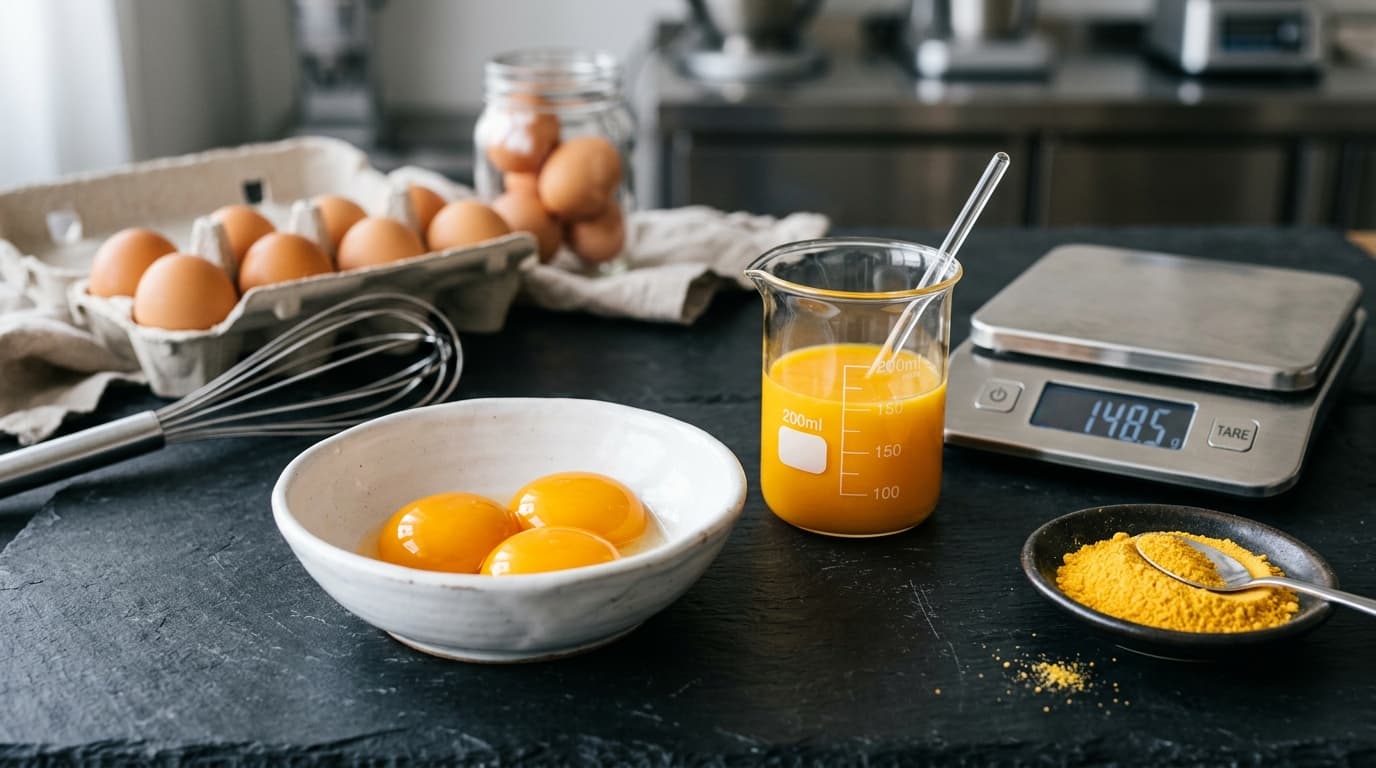
1 Large yolk = 17g · 55 kcal · 2.7g protein · 4.5g fat
Pasteurized, ≥43% solids, weigh in grams
Salted (savory) or sugared (sweet) — deduct 10% from recipe
1 part powder + 1.25 parts water ≈ fresh yolk
Fresh Shell Yolk — 17g Logging Baseline
The default for home cooking and food diary entries. One Large yolk = 17g edible, holding nearly all egg fat and fat-soluble vitamins.
- •~34% of whole-egg liquid (50g Large).
- •~50% water, ~30% lipids, ~16% protein in fresh yolk.
- •Coagulates ~149–158°F when heated undiluted.
- •Natural lecithin emulsifies up to ~200 ml oil in cold mayo.
- •Log yolk-only entries at FDC 172184; whole egg at FDC 171287.
- •Cover separated yolks with water or wrap to prevent surface drying.
- •Weigh on a scale for pastry formulas (6 yolks ≈ 102g).
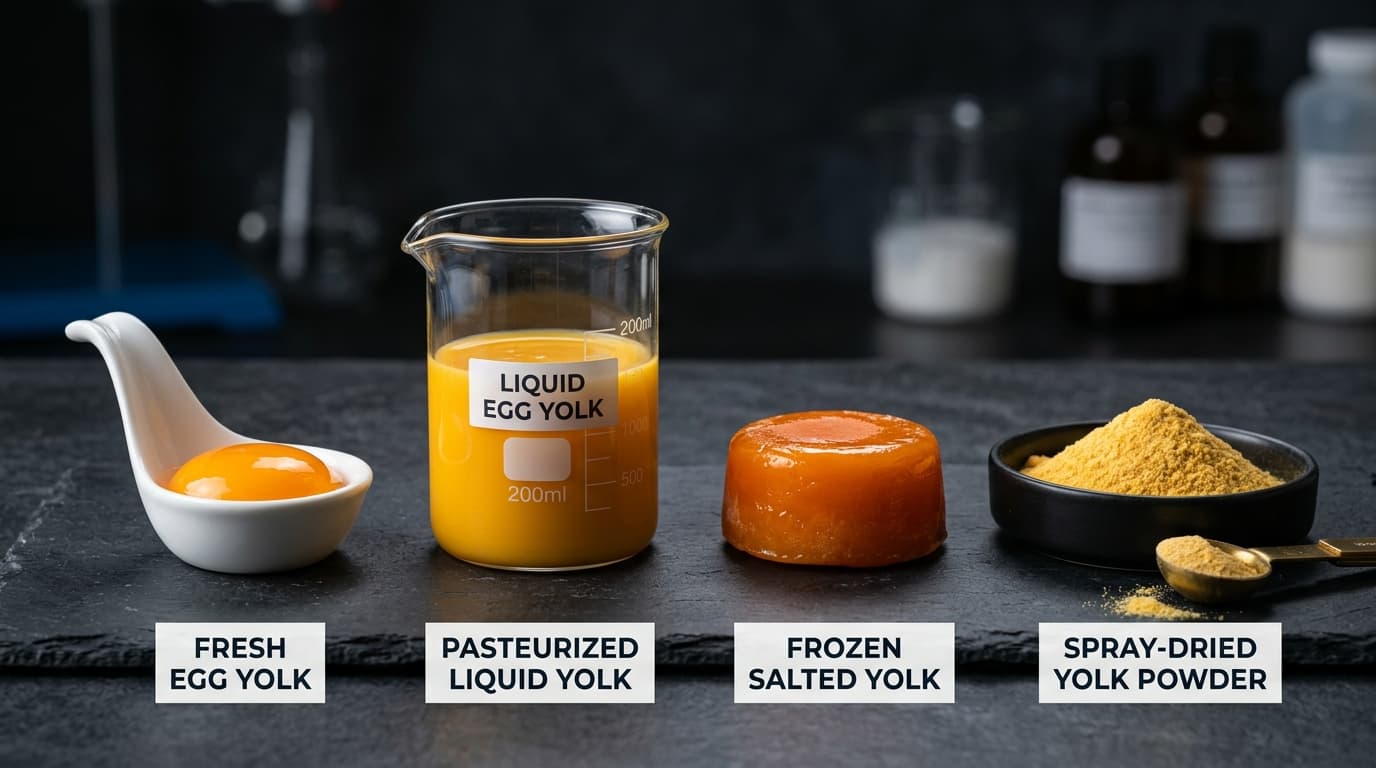
Refrigerated Liquid Yolk
Machine-separated, pasteurized yolk for foodservice. Federal minimum 43% solids reflects allowable adhering white in commercial breaking — not a different nutrient profile per gram.
- •Continuous pasteurization (~140°F / 60°C) without coagulating proteins.
- •May include 0.15% citric acid to limit gray-green discoloration on steam tables.
- •Packaged in pour cartons, pails, or bulk totes.
- •Weigh grams for accurate diary entries — do not assume Tbsp volume only.
- •3 level tablespoons (~46g) ≈ 2.5 Large shell yolks.
- •Refrigerate opened containers; use within 3–5 days.
Frozen Salted & Sugared Yolk
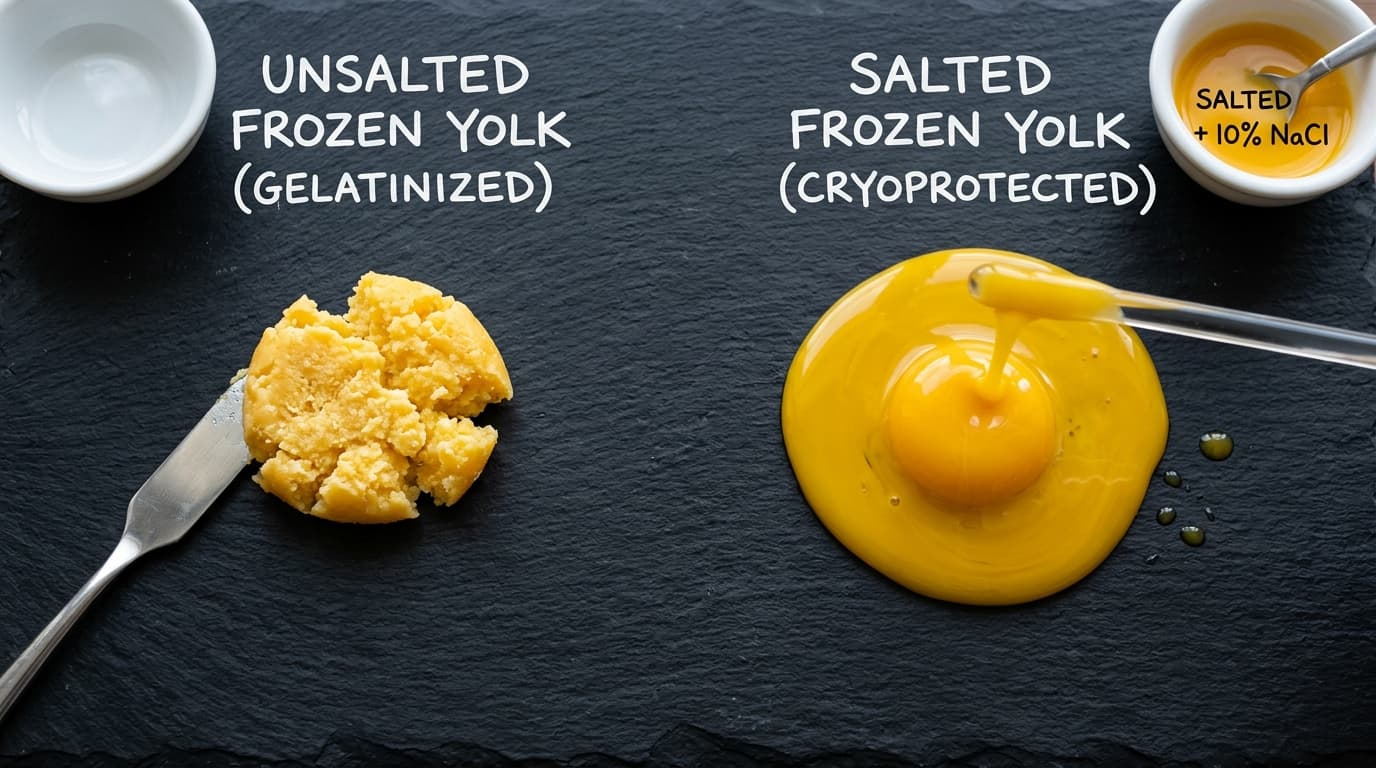
Plain frozen yolk gels on thaw. Industry adds salt (savory) or sugar (sweet) before blast freezing so lipoproteins stay fluid.
- •Below ~22°F (−6°C), ice crystals dehydrate yolk LDLs into a rubbery gel.
- •Salt or sugar binds water and lowers freezing point.
- •Standard mix: ~90% yolk + 10% cryoprotectant by weight.
- •Salted: mayonnaise, hollandaise — deduct 10% product weight as salt from recipe notes.
- •Sugared: custards, ice cream — deduct 10% as sugar from recipe notes.
- •Never substitute salted for sugared in sweet formulas.
Spray-Dried Yolk Powder
Moisture removed by spray-drying for ambient storage. Reconstitute to liquid yolk consistency for sauces and dry baking mixes.
- •Free-flowing grade may include ≤2% anti-caking agent.
- •Sealed storage over 1 year at room temperature.
- •Low-temperature drying preserves most emulsifying capacity.
- •8.5g powder + 10.5g water ≈ 1 Large shell yolk (17g liquid).
- •Rest reconstituted yolk 10 minutes before emulsifying.
- •Log powder by weight — dried yolk is calorie-dense per gram.

Salt-Cured Yolk (Artisan)
Yolks buried in salt and sugar lose moisture through osmosis, becoming firm enough to grate like hard cheese — a traditional kitchen technique, not a commercial product category.
- •Salt and sugar draw out free water, lowering water activity.
- •Low oven drying completes dehydration without melting fats.
- •Store refrigerated in a sealed container.
- •Grate over pasta, salads, or toast for concentrated savory flavor.
- •Use fresh yolks with intact membranes; cure in refrigerator only.
- •Log as yolk + added salt/sugar used in the cure bed if tracking sodium.
Duck, Quail & Goose Yolks
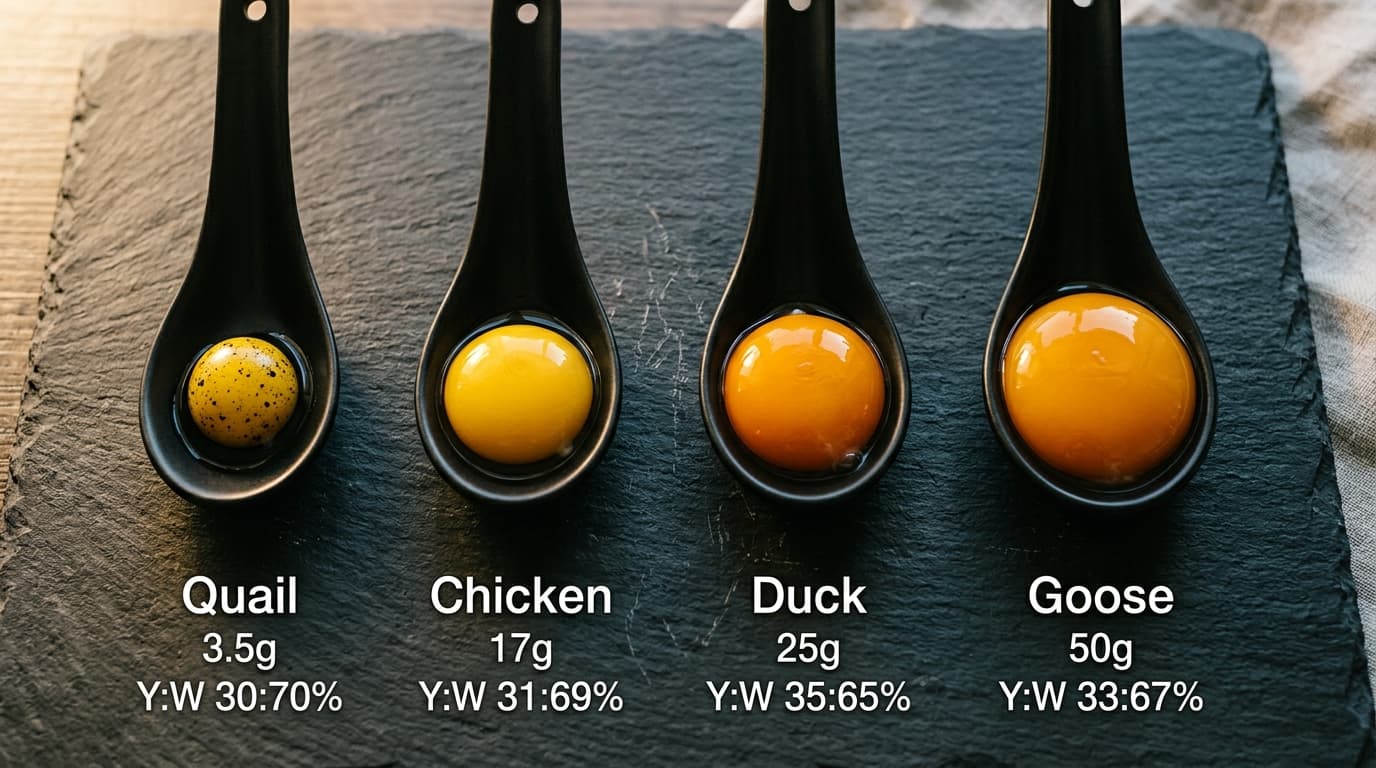
Species yolks differ in mass and fat content. Substitute by edible yolk grams in recipes and food diary entries — not by shell count.
- •Duck yolk ~25g, higher fat per yolk than chicken.
- •Quail highest yolk-to-white ratio (~39% of edible mass).
- •One goose yolk ≈ three Large chicken yolks by weight.
- •Weigh duck or quail yolks for accurate macro entries.
- •2 duck yolks ≈ 3 chicken yolks in many pasta and custard formulas.
- •See quail vs chicken comparison for whole-egg swaps.
Egg Yolk Formats — Logging Calculator
1 Large yolk = 17g, 55 kcal. Convert shell ↔ liquid ↔ powder, scale sauce batches, calculate freezer salt/sugar ratios, and swap species by weight. Informational journaling tool only.
Shell Yolks ↔ Commercial Liquid ↔ Frozen ↔ Powder
Commercial Recipe Formulation Offsets (AEB Standard)
Measure 75.6g of frozen salted yolk. Then deduct 7.6g of salt from your mayonnaise or sauce recipe to prevent over-seasoning!
Measure 75.6g of frozen sugared yolk. Then deduct 7.6g of sugar from your custard or ice cream formula!
At a Glance
~34% of whole-egg liquid (50g Large). Holds nearly all egg fat — log separately from whites (FDC 172183).
Commercial yolk formats
USDA FSIS 9 CFR Part 590 · AEB specifications
| Format | Spec | Logging note |
|---|---|---|
| Fresh shell yolk | 17g / Large | 55 kcal, 2.7g protein |
| Liquid (pasteurized) | ≥43% solids | Weigh in grams |
| Frozen salted | +8–10% salt | Deduct salt from recipe |
| Frozen sugared | +10% sugar | Deduct sugar from recipe |
| Spray-dried powder | ≥95% solids | 1 part + 1.25 water |
Freezing rule: Plain yolk gels below ~22°F (−6°C). Add ~10% salt (savory) or sugar (sweet) before freezing — or buy commercial cryoprotected product.
Reference Serving
Log fresh yolk as 17g (55 kcal). Liquid: 3 Tbsp ≈ 2.5 Large yolks. Powder: 8.5g + 10.5g water ≈ 1 yolk.
24 Large shell yolks ≈ 1 lb (453.6g) commercial liquid yolk (AEB). Using frozen salted or sugared yolk? Deduct the added 10% salt or sugar from your recipe totals.
Grade and shell color do not change yolk macros at the same weight. Informational only — not dietary advice.
Commercial Egg Yolk Formats (AEB & USDA FSIS)
| Nutrient | Format | Min. solids | Added ingredients | Typical use |
|---|---|---|---|---|
| Fresh separated shell yolk | ~50–52% | None | Table cooking, fresh pasta | |
| Refrigerated liquid yolk | 43.0% min. | None or 0.15% citric acid | Dressings, foodservice mayo | |
| Frozen salted yolk | 43.0% yolk solids | 8–10% salt (NaCl) | Mayonnaise, hollandaise, savory sauces | |
| Frozen sugared yolk | 43.0% yolk solids | 10% sugar (sucrose) | Custards, ice cream, pastries | |
| Spray-dried yolk powder | 95.0% min. | None (pure dried yolk) | Dry baking mixes, noodles, sauces | |
| Free-flowing yolk solids | 93.0% min. | ≤2% anti-caking agent | Automated dry dispensing |
9 CFR § 590.411: liquid yolk may include up to 17% adhering white from automated breaking, so the federal minimum is 43.0% egg solids.
Shell Yolk → Commercial Product Conversions (AEB)
| Nutrient | Shell yolks | Liquid (g) | Frozen salted (g) | Dried powder (g) | Recon. water (g) |
|---|---|---|---|---|---|
| 1 | 17g | 18.9g | 8.5g | 10.5g | |
| 6 | 102g | 113g | 51g | 63g | |
| 12 (1 dozen) | 204g | 227g | 102g | 126g | |
| 24 (≈1 lb liquid) | 408g | 454g | 204g | 252g |
Large shell yolk = 17g liquid. Frozen salted/sugared weights include 10% cryoprotectant. Deduct that salt or sugar from your recipe.
Species Yolk Weights for Logging (Scaled from FDC)
| Nutrient | Species | Yolk mass | Calories | Fat | Protein |
|---|---|---|---|---|---|
| Chicken (Large) | 17g | 55 kcal | 4.5g | 2.7g | |
| Duck | ~25g | ~92 kcal | ~8.4g | ~3.8g | |
| Quail | ~3.5g | ~11 kcal | ~1.0g | ~0.5g | |
| Goose | ~50g | ~190 kcal | ~18g | ~8.5g |
Substitute by edible yolk grams, not shell count. Duck and quail values scaled from USDA FDC whole-egg entries.
Yolk Emulsion Reference (Kitchen Scaling)
| Nutrient | Preparation | Yolks per cup output | Fat load | Heat note |
|---|---|---|---|---|
| Mayonnaise (cold) | ~1 yolk | ~200 ml oil | Keep oil and bowl cool | |
| Hollandaise (warm) | ~2 yolks | ~8 oz butter | Stay below ~158°F (70°C) | |
| Crème anglaise | ~2 yolks | Milk/cream base | Coats spoon ~180–185°F | |
| Lemon curd | ~3 yolks | Butter + juice | Strain while warm |
Approximate yolk counts per cup of finished sauce. One Large yolk (17g) can emulsify up to ~200 ml oil in cold mayonnaise.
The Direct Answer: One Large Yolk = 17g
In a standard Large egg (50g edible whole), the yolk contributes 17g liquid (~34% of edible mass). Log it as 55 kcal, 2.7g protein, 4.5g fat per yolk using FDC 172184.
Nearly all egg fat and fat-soluble vitamins sit in the yolk. White-only and yolk-only diary entries use FDC 172183 and 172184 respectively.
Four Commercial Yolk Formats
Refrigerated liquid yolk — pasteurized, ≥43% solids, 30–45 days chilled. Common in foodservice for batch dressings.
Frozen salted yolk (8–10% NaCl) — savory emulsions; frozen sugared yolk (10% sucrose) — custards and pastries. Both prevent freezing gelation.
Spray-dried powder — ≥95% solids, ambient shelf life. Reconstitute 1 part powder + 1.25 parts water by weight.
Why Plain Frozen Yolk Gels (and How Salt/Sugar Fixes It)
Untreated yolk frozen below about 22°F (−6°C) can turn rubbery on thaw. Ice crystals pull water from yolk lipoproteins, forming an irreversible gel.
Commercial processors add 8–10% salt (savory) or 10% sugar (sweet) before blast freezing. The solute lowers the freezing point and binds water so thawed yolk stays fluid.
Home freezing: whisk 1 tsp salt or sugar per 4 yolks if you need to freeze leftovers for later cooking.
Conversions & Species Swaps for Your Food Diary
AEB standard: 24 Large shell yolks ≈ 1 lb (453.6g) commercial liquid yolk. 6 yolks ≈ 102g liquid ≈ 1/3 cup + 1 Tbsp.
When logging frozen salted/sugared product, weigh what you use and subtract 10% as added salt or sugar from your recipe notes.
Duck (~25g yolk), quail (~3.5g), and goose (~50g) yolks differ in mass — log by grams, not egg count. See the species table above.
Common Misconceptions
Myth: You can freeze plain raw yolks and thaw them like whites.
Fact: Plain yolk often gels below ~22°F (−6°C) because lipoproteins aggregate when ice removes water. Blend in ~10% salt or sugar before freezing, or use commercial cryoprotected products.
Myth: Spray-dried yolk powder loses emulsifying ability.
Fact: Low-temperature spray-drying removes water while keeping lipoprotein structure largely intact. Reconstituted powder works in mayonnaise and cake batters when fully hydrated (10-minute rest recommended).
Myth: Deep orange yolks always mean more protein or fat.
Fact: Yolk color comes from feed carotenoids (lutein, zeaxanthin). At the same weight, pale and deep-orange yolks log similar calories, protein, and fat on FDC entries.
Myth: Frozen salted yolk works in sweet pastry without adjustment.
Fact: Salted yolk contains 8–10% NaCl. Use frozen sugared yolk (10% sucrose) for desserts and deduct that sugar from your formula.
Myth: Commercial liquid yolk is nutritionally different from fresh shell yolk.
Fact: Pasteurized liquid yolk matches fresh yolk macros per gram of edible yolk. The 43% solids rule reflects allowable adhering white in commercial breaking — not a different nutrient profile.
Practical Notes for Tracking
- •Default diary entry: 1 Large yolk = 17g (FDC 172184). Weigh for precision in baking.
- •Using frozen salted yolk? Deduct 10% of the product weight as salt from your recipe notes.
- •Using frozen sugared yolk? Deduct 10% as sugar from custards and batters.
- •Reconstitute powder: 8.5g powder + 10.5g water ≈ 1 shell yolk; rest 10 minutes before emulsifying.
- •Species swap: match yolk grams, not egg count (1 goose yolk ≈ 3 Large chicken yolks by mass).
Informational only — for personal nutrition awareness and journaling. Not personalized dietary advice. Disclaimer
Frequently Asked Questions
Scientific References & Data Sources
Nutrition values on this page are derived from the peer-reviewed sources below. This page is for informational food logging and personal awareness only. See our disclaimer.
Industry standards for dried, refrigerated liquid, frozen salted, and frozen sugared yolk products, solids requirements, and conversion formulas.
Federal rules for commercial egg yolk products, including minimum 43% egg solids for liquid yolk and pasteurization standards.
Standards of identity for liquid, frozen, and dried egg yolks, including permitted cryoprotective salt and sugar additions.
Large yolk baseline scaled from 100g: 17g edible = 55 kcal, 2.7g protein, 4.5g fat, 186mg cholesterol, 139mg choline.
Our data sourcing, verification, and fact-checking methodology.